since 2020 conceptual ceramics | conceptual porcelain
guided by the transience of time | with notions of geological and archeological time being present in the here, now and the future | recycling, reusing, reinventing historic porcelain and Bone China recipes | North Sea Mammoth Fossils Porcelain | The Hague Dunes Iron Age Pottery Porcelain | hybrid fossils-artifacts | Cups with Soul | living botanical heritage | indigenous Sphagnum mosses | Ginkgo, a living fossil | a hommage to Ginkgo biloba | Biodigital Eggshell Porcelain | anticipating the ongoing process of climate change | a future trace fossil | a next index fossil | for unknown posterity to come
Upcoming Sept-Oct-Nov 2024: artist-in-residency Kouraku Kiln in Arita, Japan.
With special thanks to the support of Stroom The Hague.
June 2024: nabijheid | proximity
artist-in-residency Park Studio de Orangerie, Zone2Source Amsterdam.
new: overlevers | survivors
Following notions of geological and archeological time being present in the here, now and in the future, I try to capture timeless landscapes into a simple sensual Cup with Soul. Faced with human-induced climate change and a sixth mass extinction, this sparked the idea to develop a series of ‘Survivors’, to express the beauty, versatility, resilience and vulnerability of reciprocal human-nature inclusive relationships.
‘Overlevers | Survivors’ is a hommage to Ginkgo biloba, said to be a living fossil or ‘a tree that time forgot’ (Peter Crane). A survivor, understood to be unchanged for 200 million years through several mass extinctions and regarded as the oldest surviving plant. Deeply intertwined with the prehistoric planet. Nurtured, valued and saved from extinction by human beings.
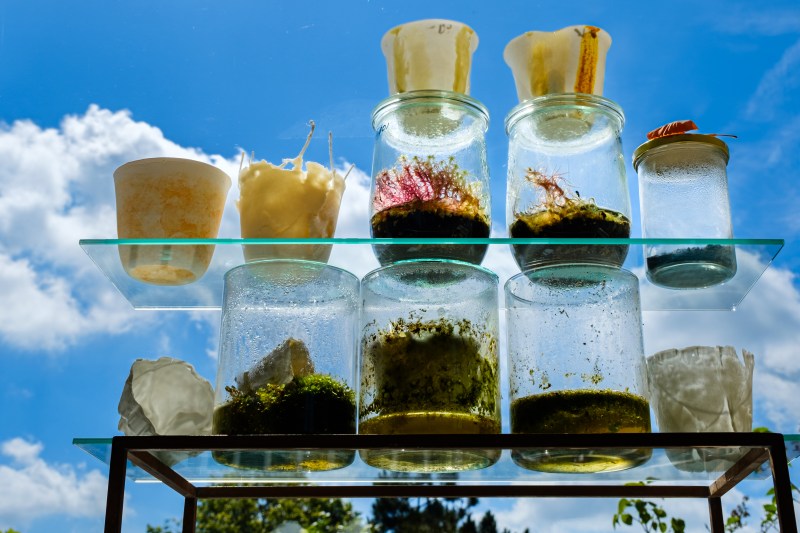
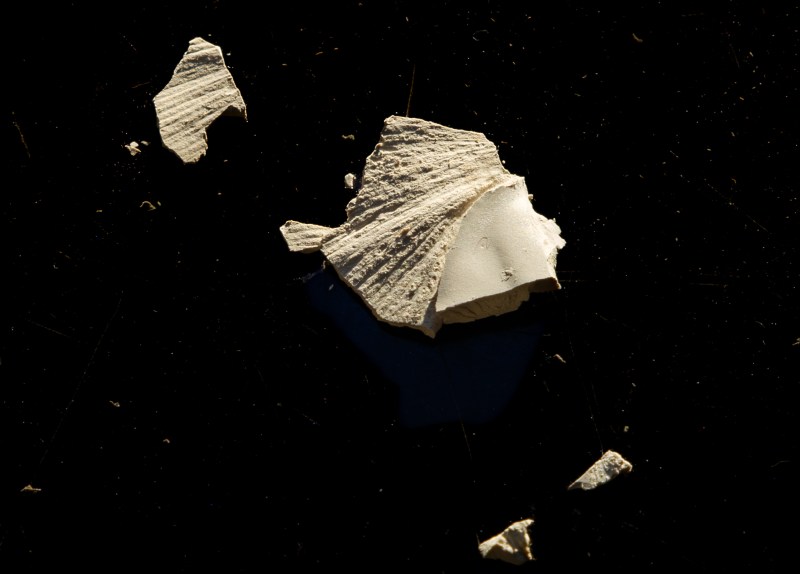
2023: living leaves of the oldest Ginkgo biloba in the Netherlands are in the process of making imprints in raw casting porcelain. Brought by Dutch Eastern India Company botanists (VOC) and planted in 1730 in the Oude Hortus, Botanical Garden Utrecht University.

| porcelain | living botanical heritage | a hommage to Ginkgo biloba
Op het raakvlak van porselein met levend botanisch erfgoed werk ik aan een serie ‘Overlevers | Survivors’. Een hommage aan de Ginkgo biloba, een boom als levende fossiel, overlever van meerdere massa extincties. Met afdrukken die Ginkgo bladeren zelf in rauw gietporselein maken en 3-d technologie giet ik het dunst mogelijke eierschaalporselein om uitdrukking te geven aan schoonheid van kwetsbaarheid en vergankelijkheid.
At the intersection of porcelain with living botanical heritage | Ginkgo imprints as future trace fossil in porcelain | a petrified movement of transitional living – drying – dying living organism | reflecting post-colonial botanical heritage and questioning appropriations of living species
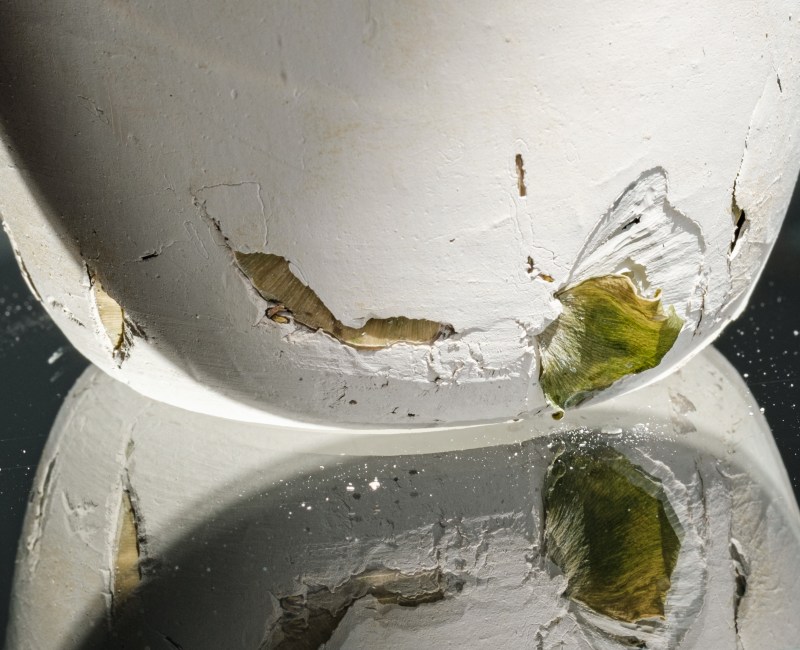
Allowing time and narratives between entities to guide me, I started slip casting raw porcelain with autumn leaves of Ginkgo biloba (Japanese Garden Amsterdam). I became intrigued by leaves making imprints themselves in raw porcelain. The ongoing beauty of transience is momentarily stopped by 3-d scans to make molds for casting the thinnest translucent botanical porcelain or Biodigital Eggshell Porcelain.
Biodigital Eggshell Porcelain
still of time | raw | ginkgo biloba | plantscape | plantmade | 3-d technology | cast inside and outside | botanical porcelain | 2022-2023
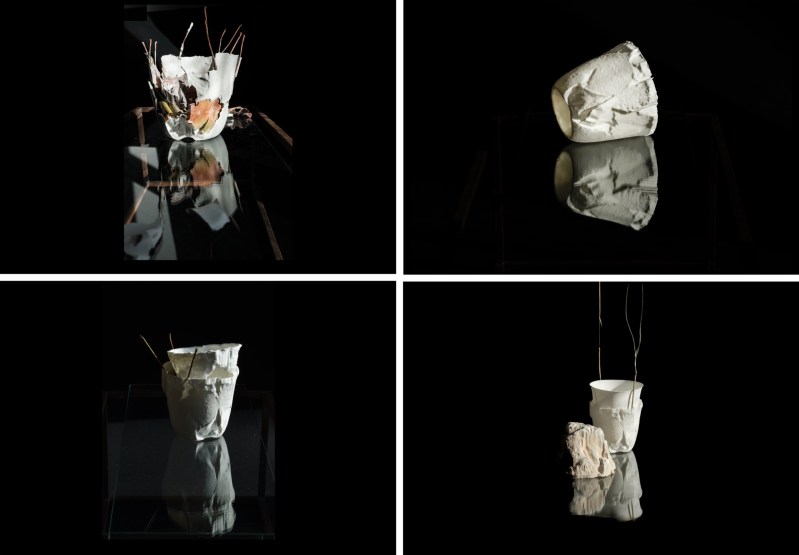
Ginkgo biloba, origin leaves Japanese Garden, Amstelpark Amsterdam, planted in 1970 for the horticultural show Floriade 1972
Cup with Soul | plant made | raw | Ginkgo leaves in the process of making imprints themselves in raw casting porcelain | Ginkgo is understood to be a living fossil
raw Plantscape | ongoing transience momentarily stopped with 3-d technology | Biodigital Eggshell Porcelain | fired | 2022-2023 | photos Theo Mahieu | 3-d scans Yvo van Os
ongoing transience momentarily stopped with 3-d technology
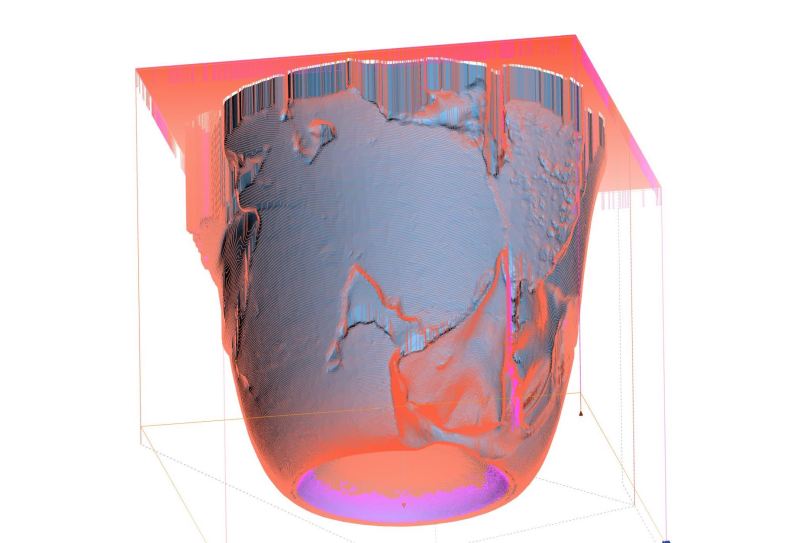
intrinsieke uitdrukkingskracht van rauwe natuur zelf | intrinsic expressive power of raw nature herself
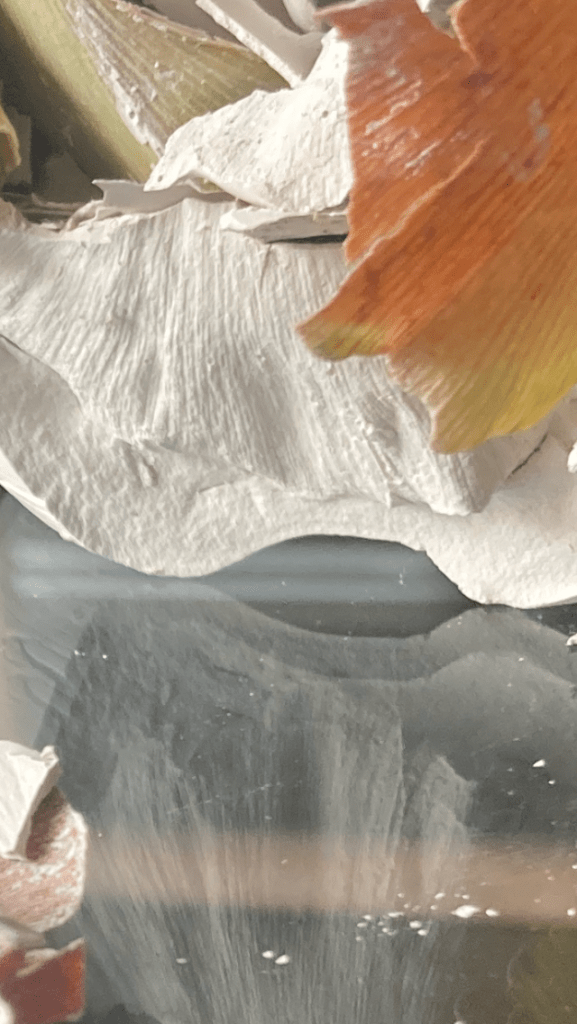
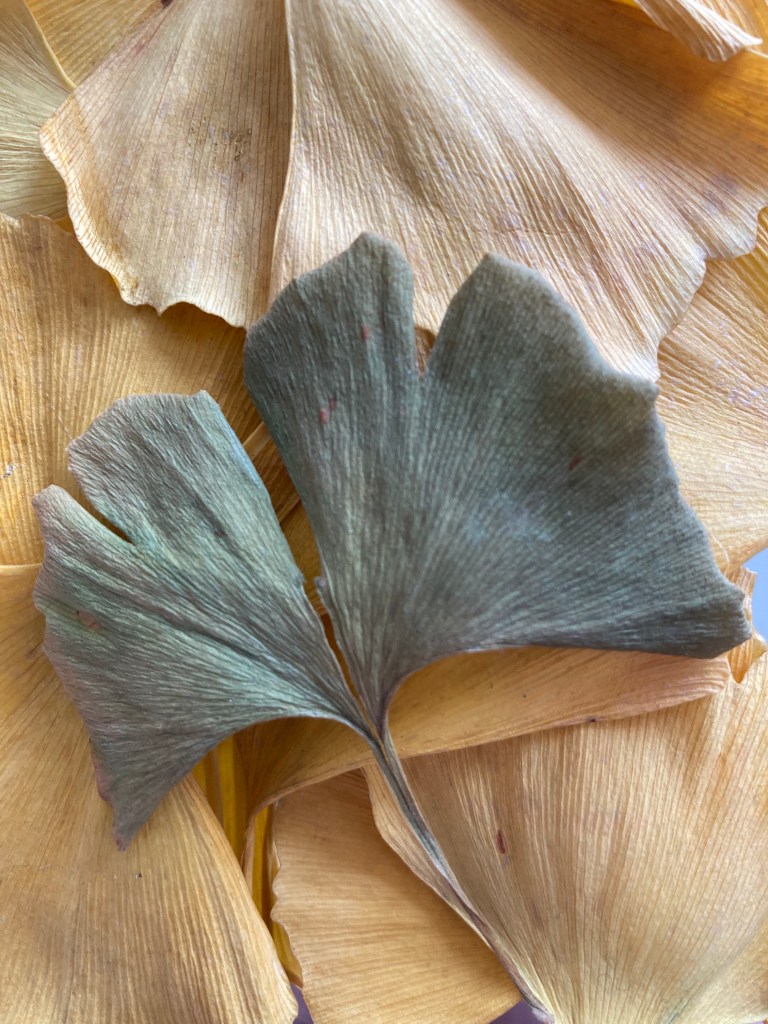
Two oldest Gingko’s in Netherlands planted in 1730 in Botanical Garden Utrecht; planted in 1785 in Botanical Garden Leiden
Bekers met Ziel | Cups with Soul
still-life | immersive climatescapes | collection of Cups with Soul 2020-2023

Still-life | Collection of Cups with Soul | 2022-2023
L to R: Porcelain with boulder clay (keileem, transported by glaciers to the north of The Netherlands during the last ice age) | North Sea Mammoth Fossils Porcelain | Mosses & The Hague Dunes Iron Age Artifacts Porcelain | Biodigital Eggshell Porcelain cast outside and cast inside
Made during artist-in-residency EKWC 2020 & 2021 | raw Plantscape, artist-in-residency Dagzomen, Zone2Source 2022 | Biodigital Eggshell Porcelain 2022-2023 | photo Theo Mahieu
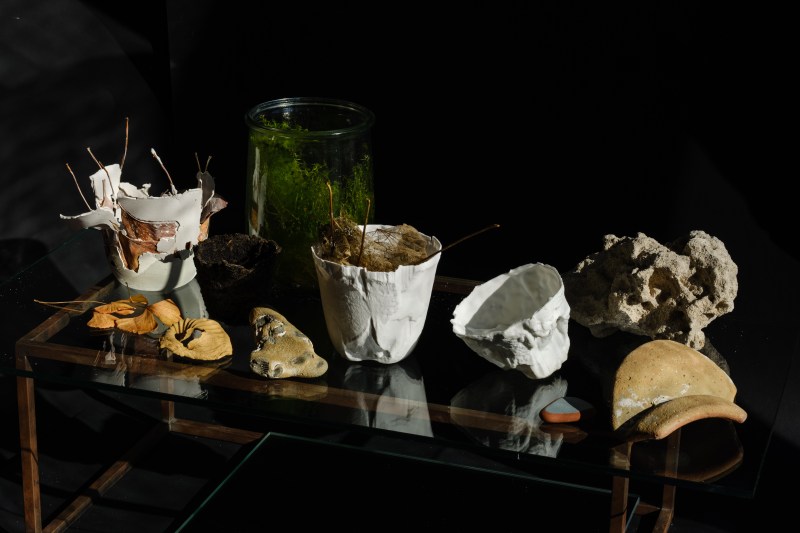
Still-life 2 | Plantscape | Biodigital Eggshell Porcelain | Sphagnum | fossils | artifacts | sublime soft stone | 2023 | photo Theo Mahieu

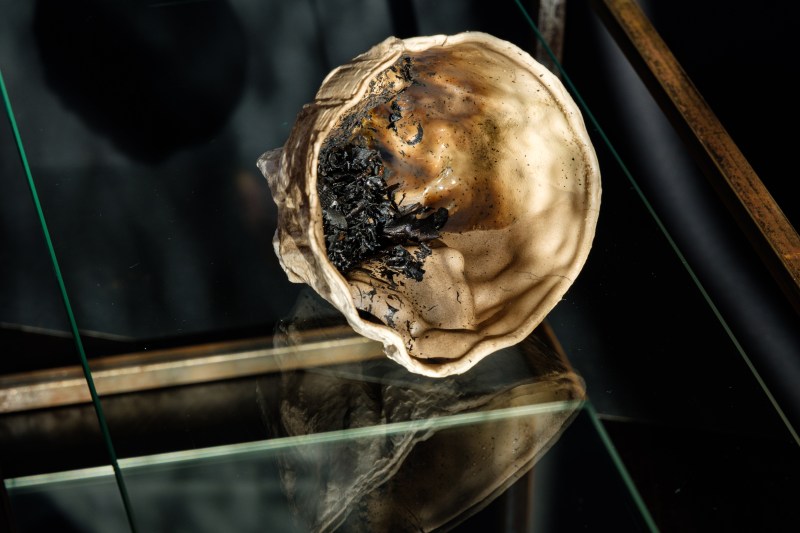
shape-shifting sun, water, minerals 2 | glazing with Ginkgo biloba powder | Raku | 2023
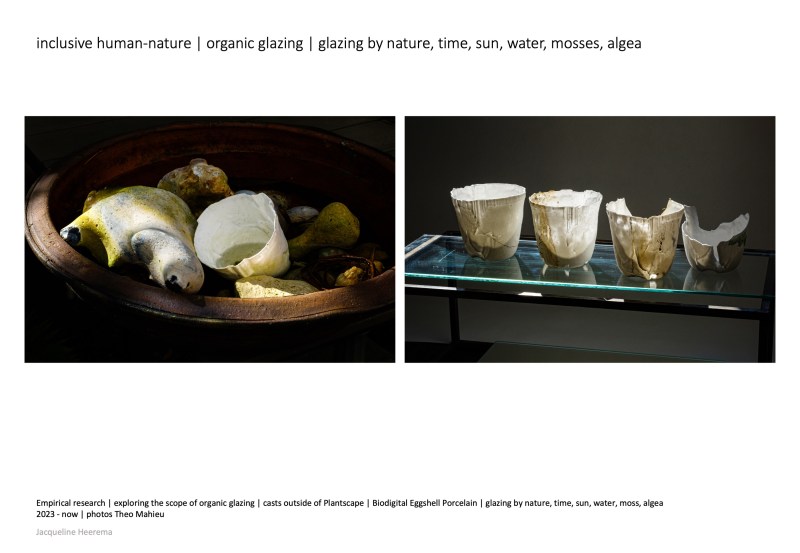
organic glazing | glazing by nature, time, sun, water, mosses, algea | inclusive human-nature | 2023 | photos Theo Mahieu
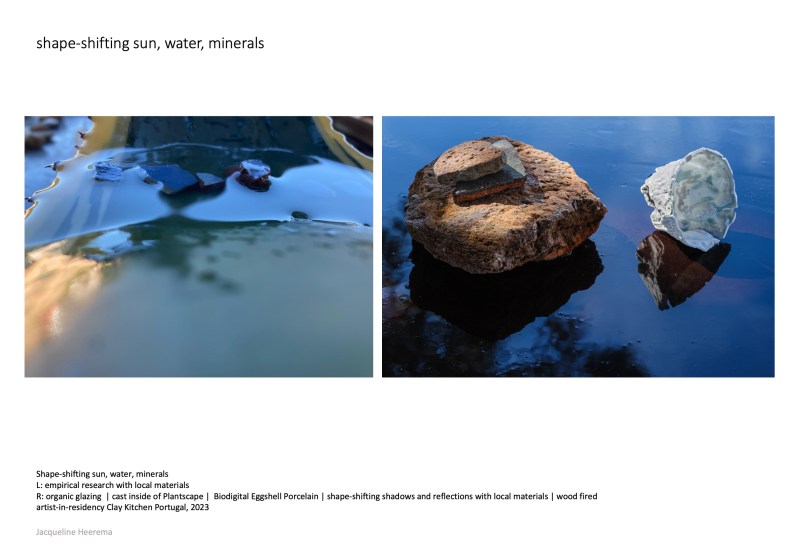
shape-shifting sun, water, minerals | wood fire | artist-in-residency Clay Kitchen Portugal |2023
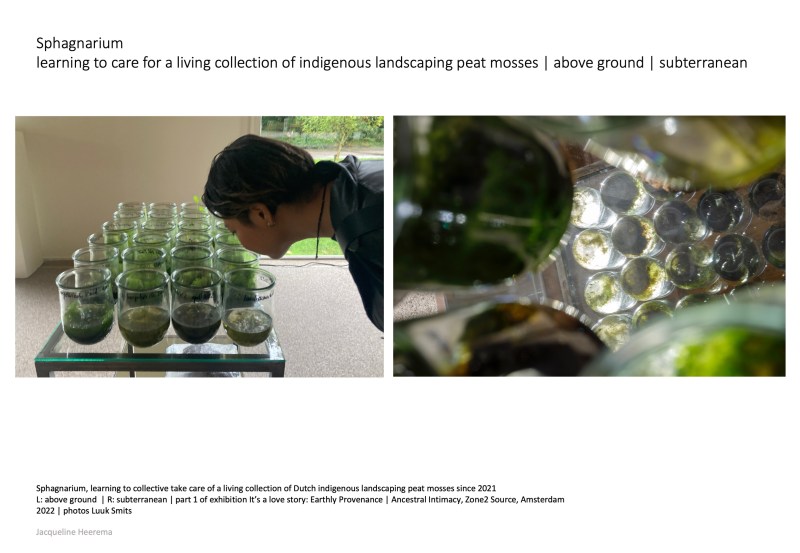
it’s a love story: Earthly Provenance | Ancestral Intimacy | exhibition | Zone2Source | 2022
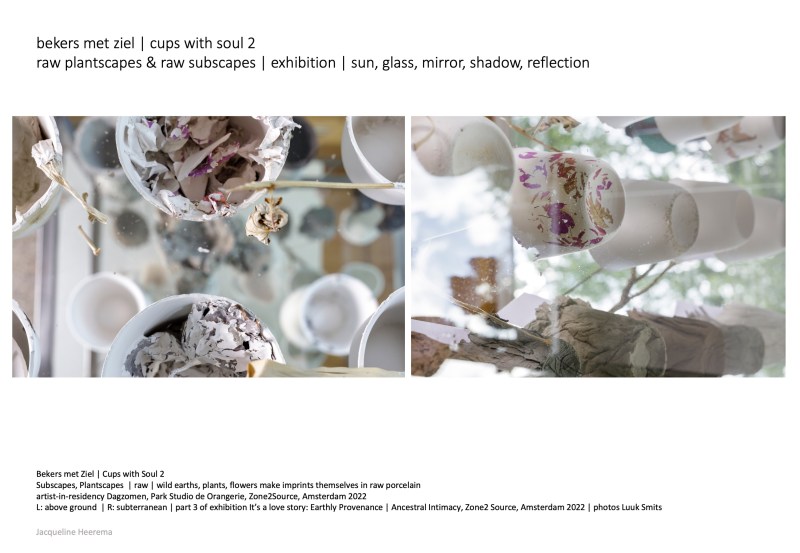
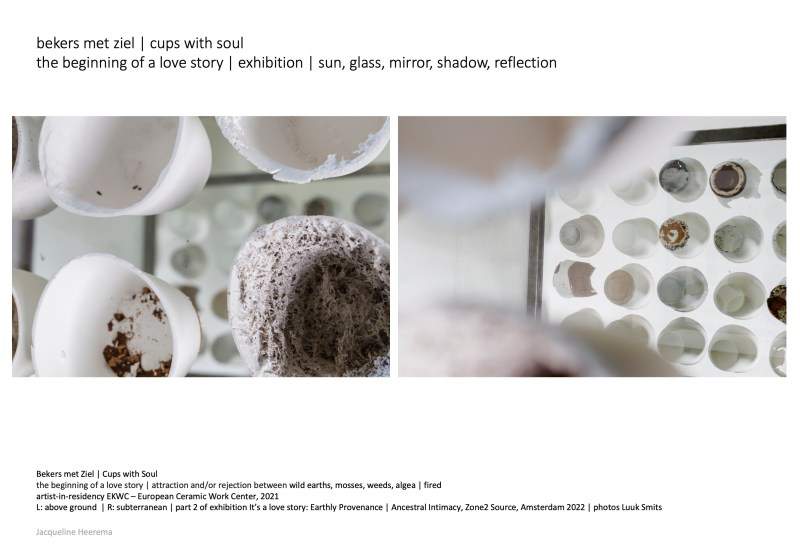
top: bekers met ziel 2 | cups with soul 2 | raw plantscapes & raw subscapes | exhibition | sun, glass, mirror, shadow, reflection | artist-in-residency Dagzomen | Park Studio de Orangerie |
middle: bekers met ziel | cups with soul | the beginning of a love story | artist-in-residency EKWC 2020 and 2021
below: Sphagnarium – learning to care for a living collection of Dutch indigenous landscaping peat mosses | above ground | subterranean | since 2021 | photos Luuk Smits
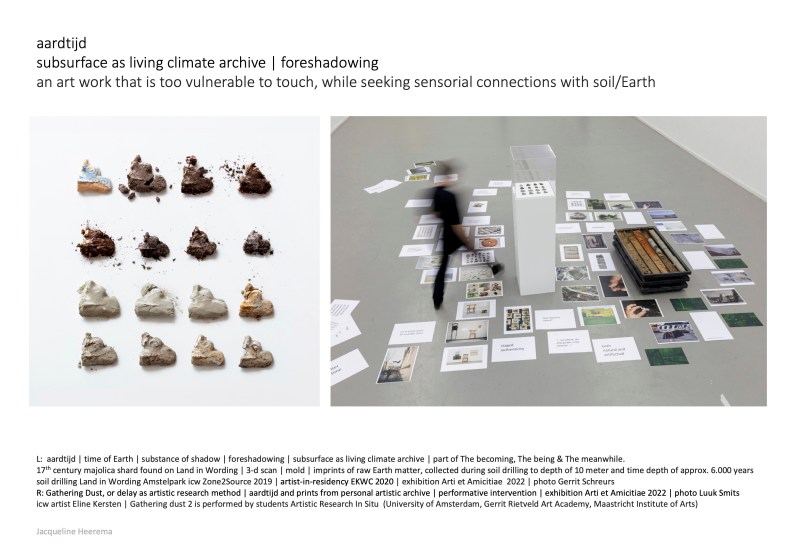
aardtijd
an art work that is too vulnerable to touch while seeking sensorial connections with soil |Earth
17th century majolica shard, imprints with raw earth to a depth of 10 meters and to a time-depth of approx. 6.000 years | soil drilling Land in Wording 2019 | photo Gerrit Schreurs | 2021-2022
Exhibition at Arti et Amicitiae, Amsterdam 2022: Gathering Dust, or delay as artistic research method | performative intervention | aardtijd and prints from personal artistic archive | photo Luuk Smits.
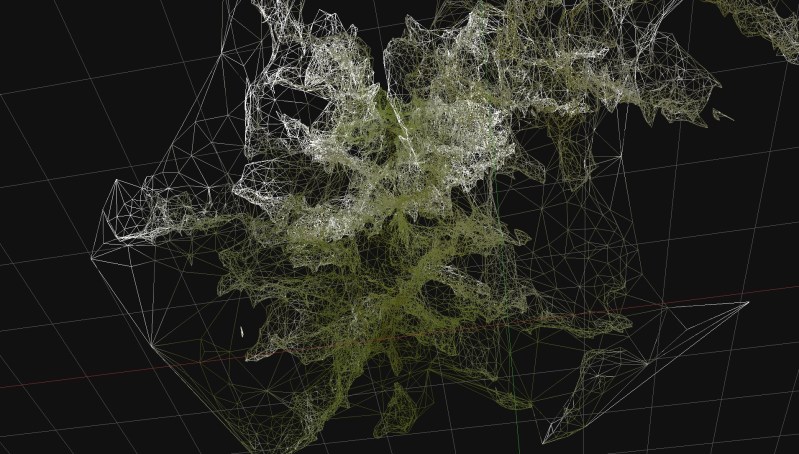
Sphagnarium
learning to take care for a living collection of Dutch indigenous landscaping peat mosses since 2021 l submerged | a single strand of Dutch indigenous Sphagnum in water | peat mosses that shaped the Netherland | 3-d scan Yvo van Os | 2023
With special thanks to Stroom The Hague, Mondriaan Fonds, Theo Mahieu, Yvo van Os, Frans en Karin van Paassen, Joris Bos, Kristie van Noort, Daniel van Dijck, Luuk Smits, Botanical Garden Utrecht University, Botanical Garden Leiden University, Zone2Source, Japanese Garden Amstelpark, EKWC – the European Ceramics Work Centre, Clay Kitchen Portugal, Cascadas Artspace Barcelona.. and many more.
 Jacqueline Heerema