Looking under the Water
May-August 2026: 2nd artist-in-residency Kouraku Kiln in Arita, Japan
磁 器 は 命 が な い 物 体 で は あ り ま せ ん – porcelain is not a dead thing

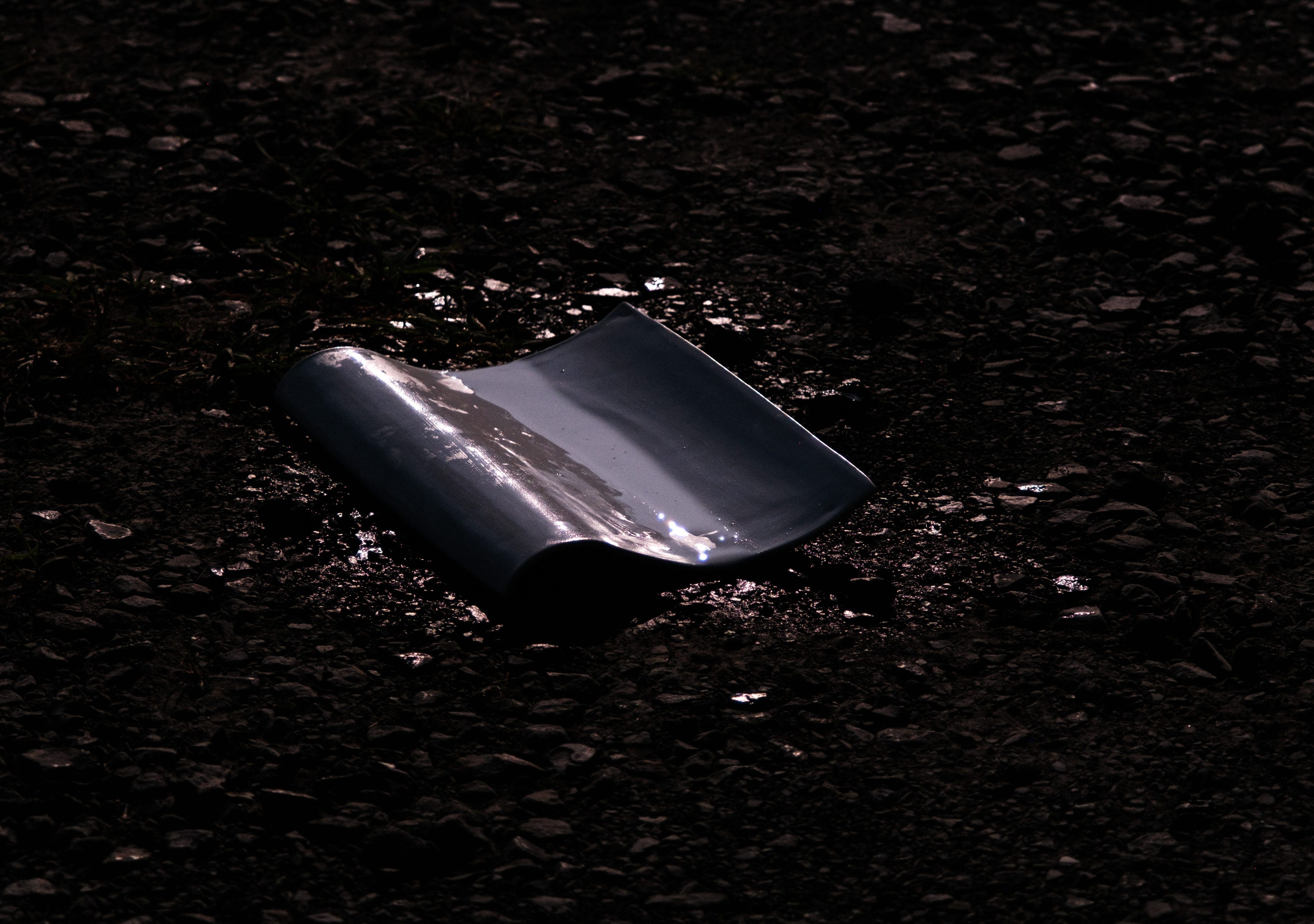
the making of ShadowPorcelain while artist-in-residence of Kouraku Kiln in Arita Japan – 屋根瓦 – kawara – roof tiles
porcelain roof tiles – glazed with 青白磁 – Seihakuji – Pale Blue – also called ‘looking under the water’
in context of preserving traditional black clay roof tiles under the Shiiya Shinto Shrine in Arita Japan
With special thanks to the generous support and hospitality of the staff and expert guidance of the artisans at Kouraku Kiln in Arita, Jérémie Paré-Julien, Takada-san, Mikki-san and Bonnie-san. With gratitude to kiln masters Sasaki-san and Tanaka-san for being allowed to make use of the white artisanal production kiln at Kouraku Kiln, the blue gosu kiln at Fukaumi, the black roof tiles kiln at Shibuta Tile Factory and the portable kiln of Rokoyugama. Inspired by meetings with archeologist Murakami-sensei (Arita Museum of History), Fukaumi-san (breath of gosu) and Tajima (secret eggshell porcelain recipe) in 2024 and in 2026. Developed in close association with De Onkruidenier – Jonmar van Vlijmen and Ronald Boer – in Amsterdam, Sachi Miyachi and 3D experts Yvo van Os and Sander Alblas. Most photos by Theo Mahieu.
Seeking the light of the Shadow, Japan 2024
Sept-Nov 2024: first artist-in-residency Kouraku Kiln in Arita, Japan with special thanks to Stroom The Hague https://lxwxdxtime.world/komorebi/
The remark in 2024 by Murakami-sensei about a parallel in ’emptiness’ in Japanse porcelain and Japanese gardens became the inspiration for ShadowPorcelain, 2024 – ongoing.
May 2026: Soft Launch ShadowPorcelain in Amsterdam during full moon, with special thanks to De Onkruidenier, Sachi Miyachi, Cultuurfonds-Tijlfonds https://lxwxdxtime.world/shadowporcelain/
it’s a love story!
Earth + sea + geology + archeology + time + art + nature + 3D technology + future climate
conceptual porcelain | climate conscious ceramics | Future Paleo Porcelain https://lxwxdxtime.world
made in Japan in a white, a black, a blue and a portable kiln
ShadowPorcelain Japan – the making of ShadowPorcelain continues while artist-in-residence of Kouraku Kiln in Arita Japan –
porcelain roof tiles – glazed with 青白磁 – Seihakuji – Pale Blue – also called ‘looking under the water’
With special thanks to the expert guidance of the team and kiln masters at Kouraku Kiln and Shibuta Tile Factory, where traditional black Japanese roof tiles are made with clay from under the rice fields and smothered in charcoal in a black kiln.
Future Ancestral Echoes – a contemporary earless hybrid eggshell porcelain – in between – Japanese and European aesthetics – – hybrid – a person or thing of mixed origin – when my late mother’s orphaned porcelain collection of European ‘Royal Albert Lavender Rose’ meets Japanese ‘Versailles’ – ベルサイユ – designed by Ryuichi Tokunaga, 4th generation and at that time president and kiln master at Kouraku Kiln. With special thanks to Murakami-sensei for sharing the history and values of porcelain.
Nori – future ancestral echos – hybrid earless eggshell porcelain made in the mold of ‘Versailles’ – painted with no 8 Gosu and glazed with Seihakuji – with two white dots indicating the intended placement of the ear – broken in the kiln
呉須 – Gosu – blue pigment experiment – following the first fragile test of Breath of Gosu in 2024, we fired the blue Gosu kiln at Fukaumi twice in 2026 to allow raw eggshell porcelain to inhale or collect imprints of years of making the blue pigment called Gosu in the blue kiln. With special thanks to the Fukaumi family in Arita Japan.
Rustic eggshell porcelain – merging the earthly charm of pottery with the refined elegance of porcelain –
making use of ‘rustic’ is an hommage to 16th century nature explorer and ceramist Bernard Palissy, inventor of ‘rustic ware’. Derived from rus, meaning ‘countryside’ – rural in Engels – ruraal in Dutch, landelijk, arcadisch. With special thanks to Rokoyugama.
貝 – Shell – Schelp – 90 – duration of time – daily making of a reversed imprints of a shell – an accumulation during 3 month’s residency in Japan – deep pools of light and shade emerge as the relief made by the imprint of the shell enhances the effect of various painting and glazing techniques. With special thanks to Jérémie Paré-Julien for teaching underglaze, glaze, decal and more.
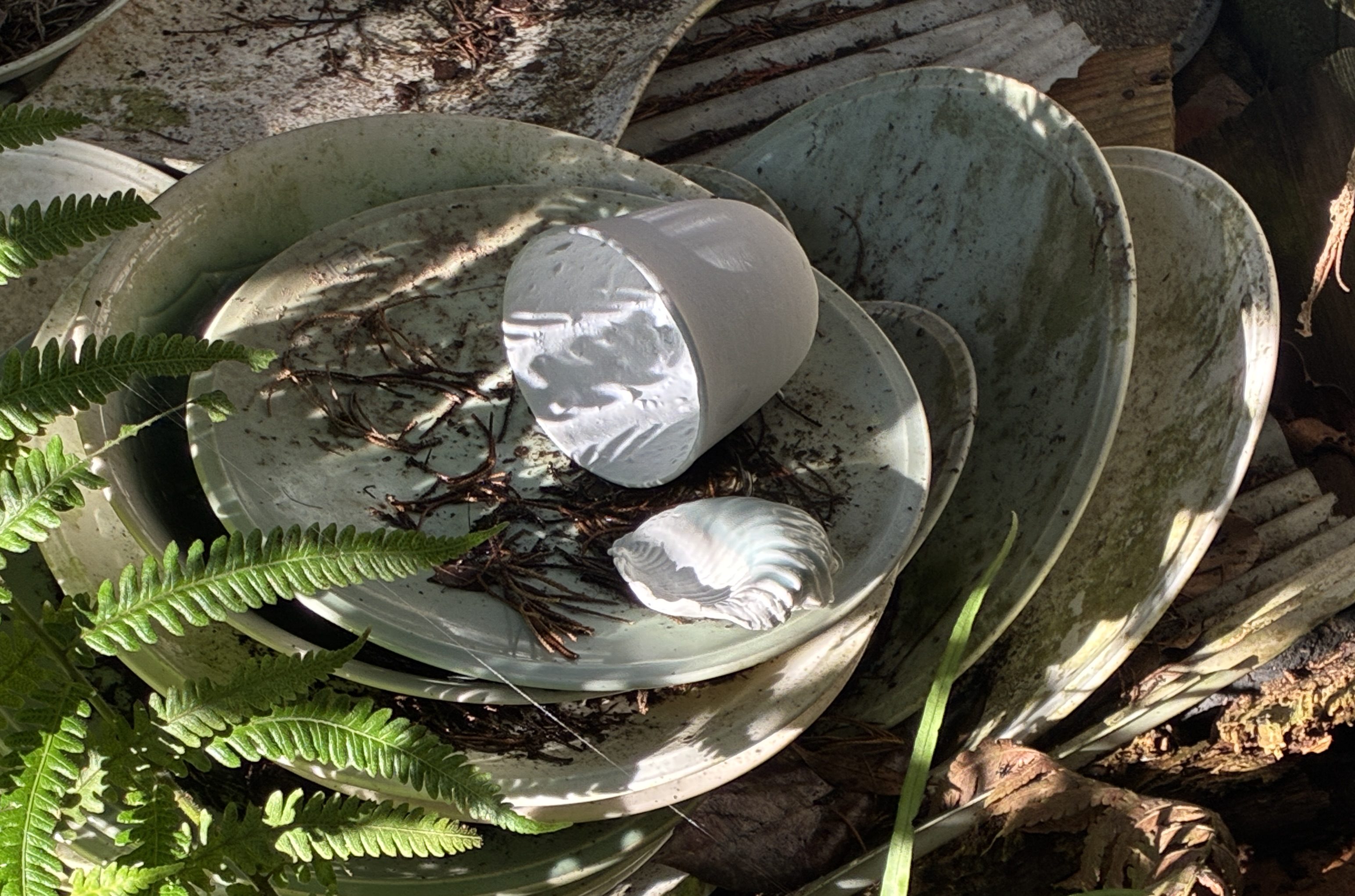
蛤 – Hamaguri – clam – venusschelp – 貝合わせ – Kai-awase – shell-matching is a Japanese game with shells, typically the shells of the hamaguri clam – only from one shell two halves can match
inspiration
Through Kū (空), Ma (間), Yohaku no Bi (余白の美) and Hikizan no Bigaku (引き算の美学) we begin to understand why space holds such deep meaning in Japanese aesthetics. In ’emptiness’ lie the greatest possibilities. A pause, a blank margin, the space in-between or a deliberate act of subtraction is never meaningless; each carries presence, energy, and potential.
青白磁 – Seihakuji – pale blue glaze – also called ‘looking under the water’
米 – Kome – rice – paddy – rijst – rijstveld
月 – Tsuki – moon – month – maan – maand
影 – Kage – shade – shadow – schaduw – schaduwzijde
屋根瓦 – kawara – roof tile – dakpan
貝 – Shell – schelp
蛤 – Hamaguri – clam – venusschelp
磁器 – Jiki – porcelain – porselein
呉須 – Gosu – cobalt blue pigment – kobalt blauw pigment
凄い – sugoi – amazing – wonderlijk
ABOUT
conceptual artist, curator, tutor, porcelain maker | researching various ceramic techniques | re-invent historic porcelain- and Bone China – recipes | re-use, re-cycle, up-cycle with respect for re-sources, both natural and artifactual | hybrid fossils-artifacts | North Sea Mammoth Fossils Porcelain and -celadon | The Hague Dunes Iron Age Pottery Porcelain and -celadon | aardtijd | Bekers met Ziel | Cups with Soul | Raw Subscapes & Raw Plantscapes | Still – Life | plant made | botanical porcelain | Biodigital Eggshell Porcelain | Future Paleo Porcelain & more, while working with 3D technology, photography, texts and public interventions.
Jacqueline is fascinated by perceptions of time and value systems, which we often take for granted. She perceives art as public space and interconnects art and science with audiences. Since six years she pours her ideas about time, climate, landscapes and matter into porcelain. Casting the thinnest translucent eggshell porcelain is an exercise in anticipation of a future climate to express the beauty of Earthly vulnerability and transience. In these works, porcelain is not a ‘dead thing’. Eggshell porcelain is extremely sensitive and responsive. Raw and biscuit (or low-fired) porcelain is porous, permeable to water. High-fired eggshell porcelain is translucent, permeable to light. Through an intentionally chosen, consistent and recognizable visual language, the focus shifts from aesthetics to content. Regenerative transformation forms the core of the Cups with Soul series and the botanical porcelain. Raw porcelain meets living botanical heritage. Biomorphic, when blowing breath before the raw liquid porcelain solidifies. Experiments with porcelain in water with living seaweed, algae, and mosses challenge perceptions of living, non-living, once-living, and never-living. Processes are set in motion to continue living, or even generate their own co-habitation (biotope, habitat, work). Time and climate are made tangible in a sensorial form of ecological storytelling.
月 – Moon – Maan
when the light changes, your perception changes; you may become more receptive – also to narratives beyond your imagination
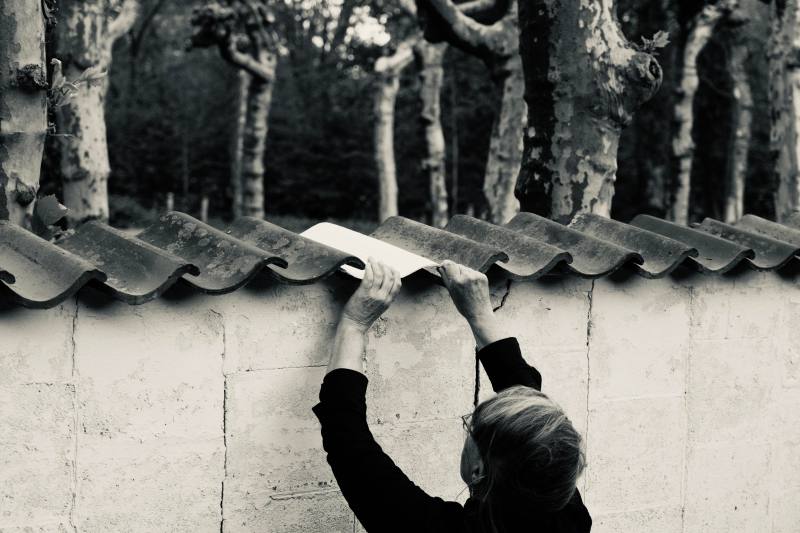
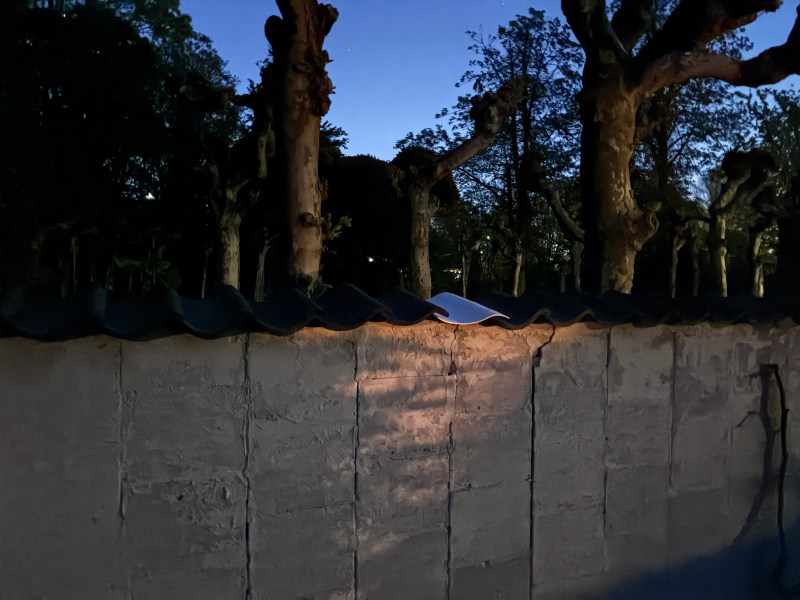
屋根瓦 – kawara – roof tile – dakpan
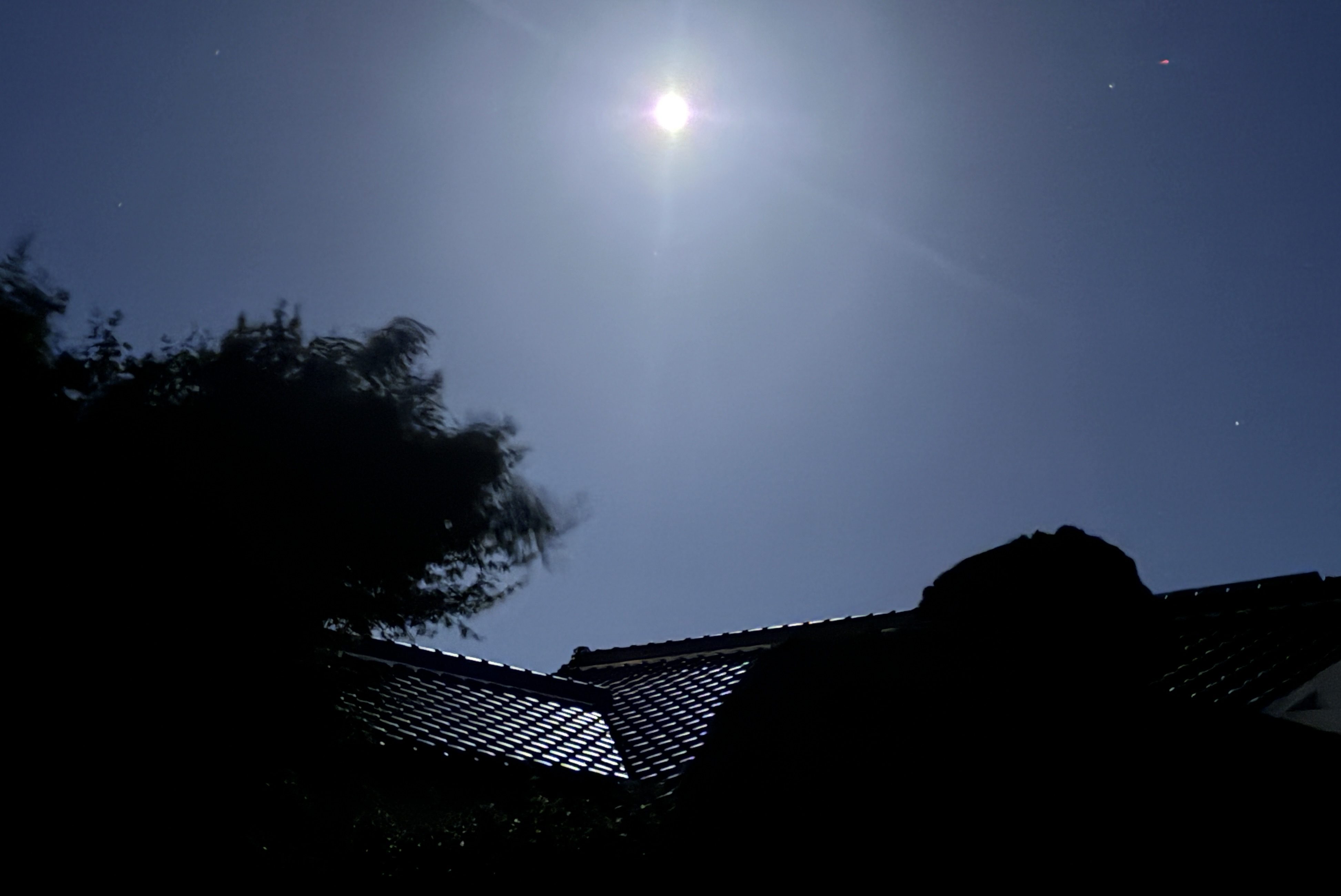
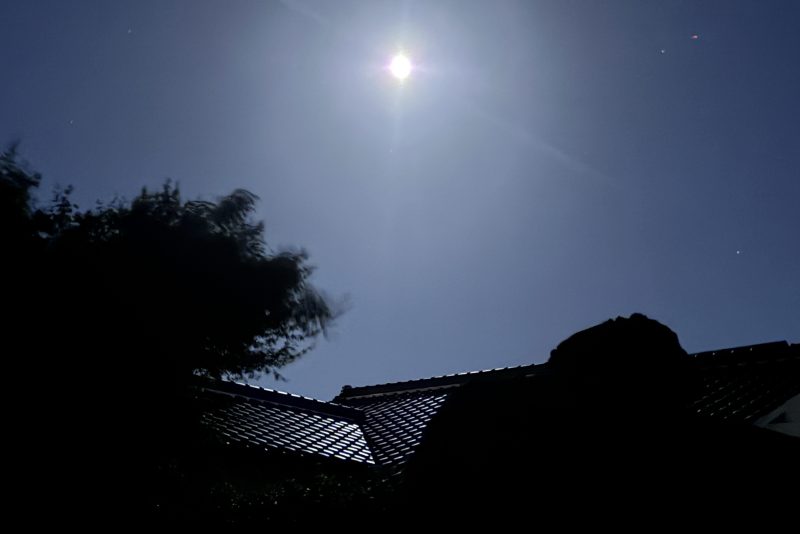
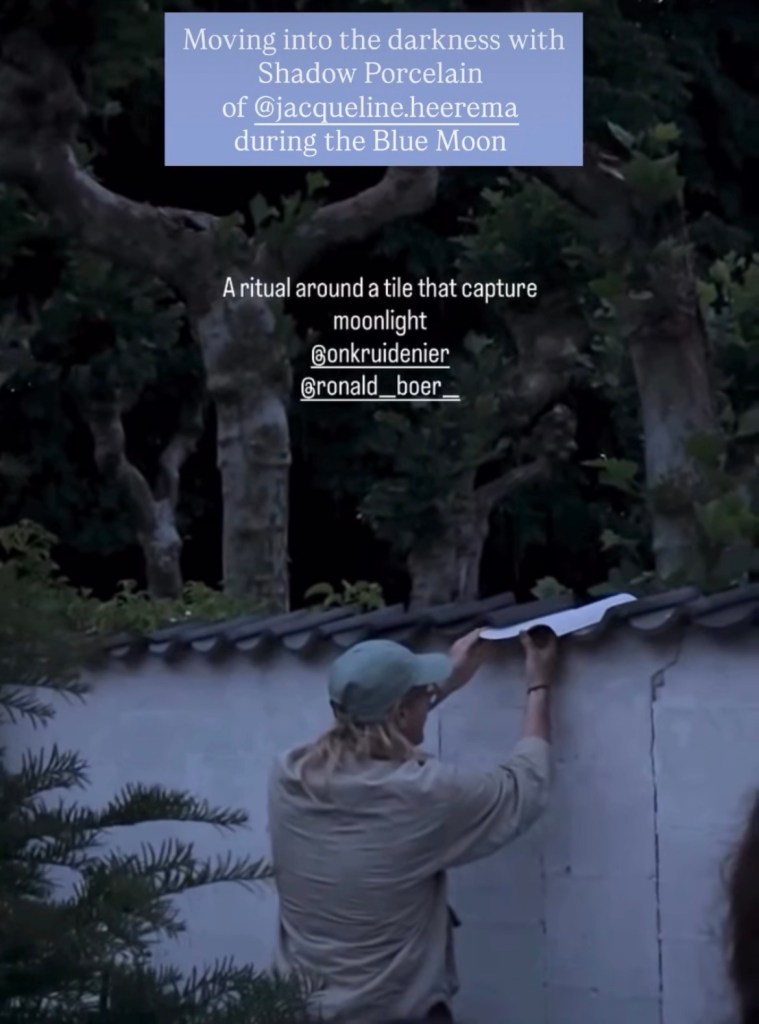
blue moon – the second full moon in May on May 31 – illuminates the roof tiles in Japan while in Amsterdam De Onkruidenier performs the moon ritual with the ShadowPorcelain
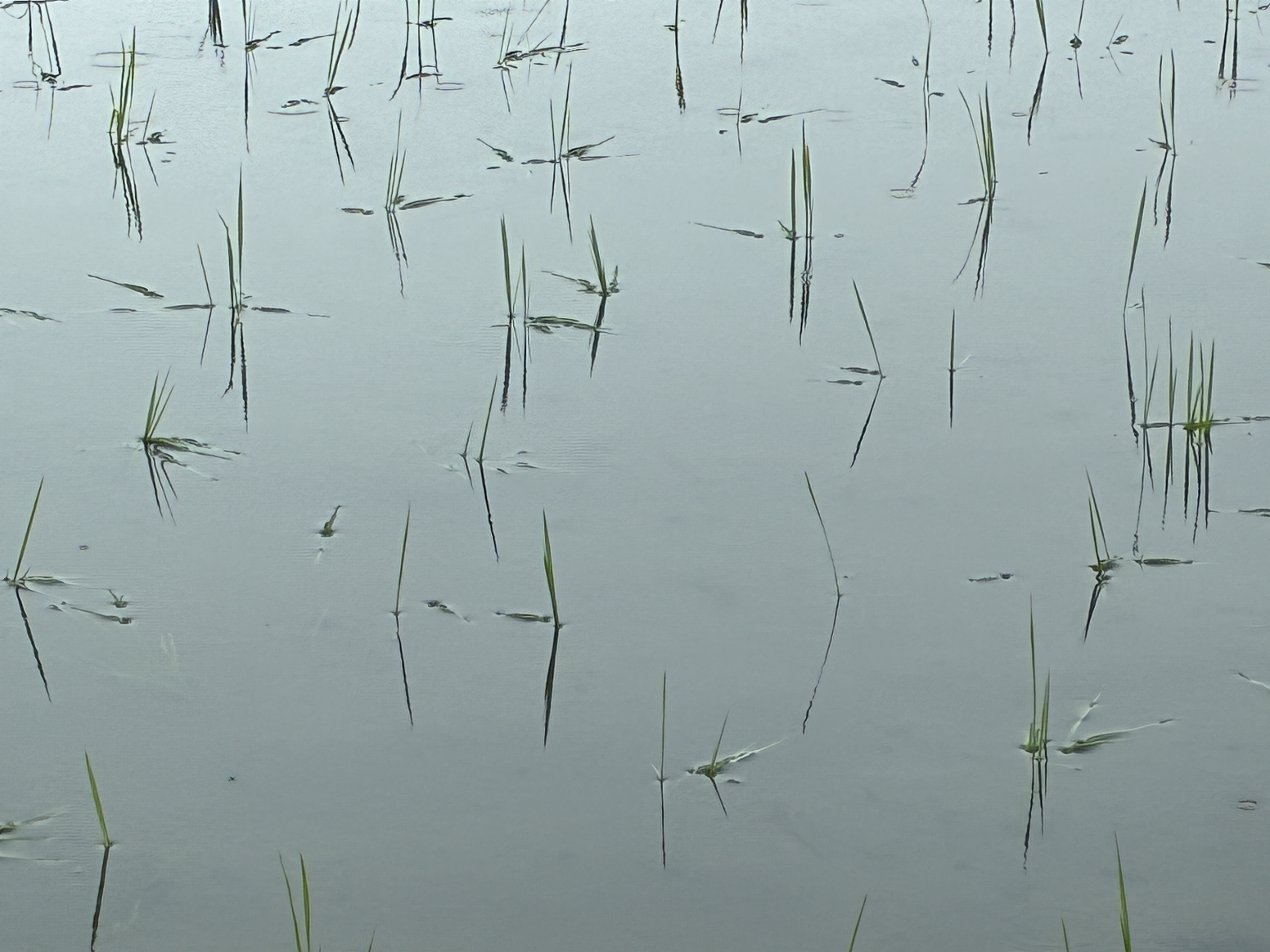
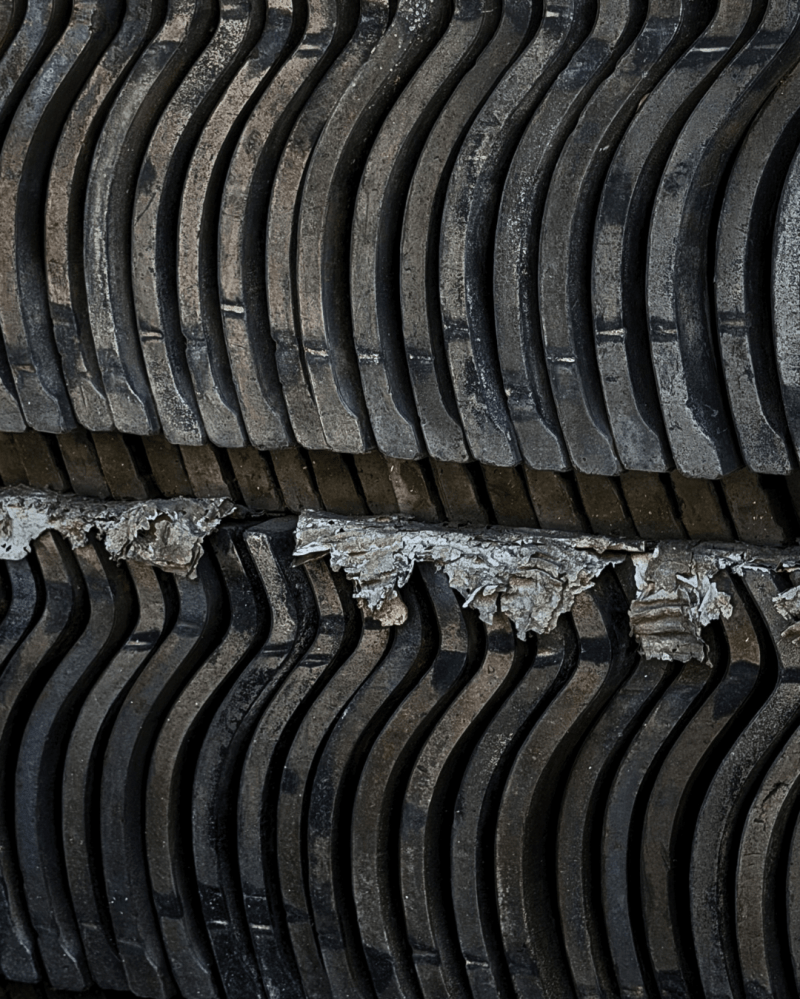
water moon – the full moon on June 30 – reflects the seasonal rice planting in Arita, Japan
the third full moon – while – in Japan created a moon theatre for a full moon porcelain roof tile

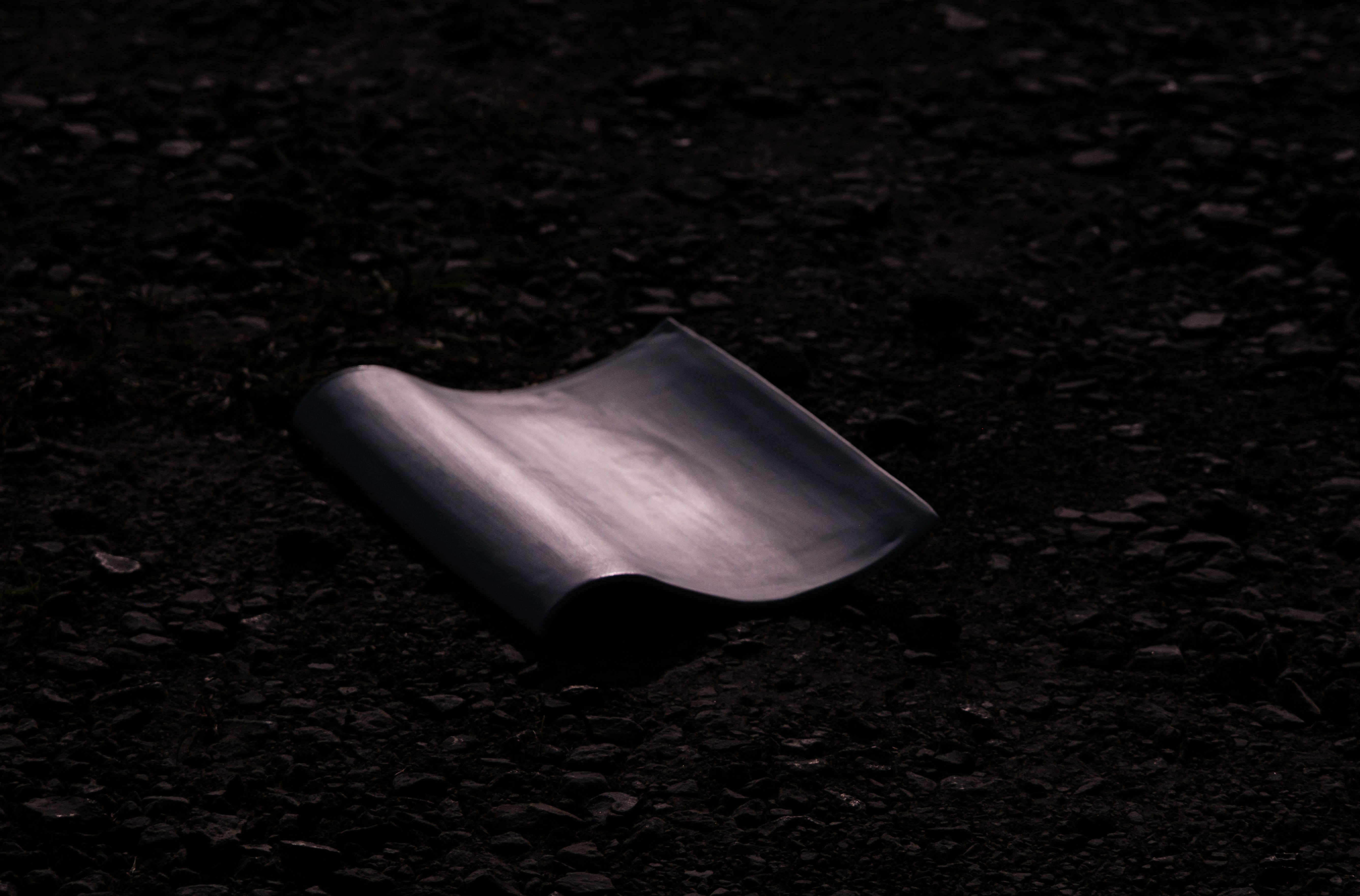
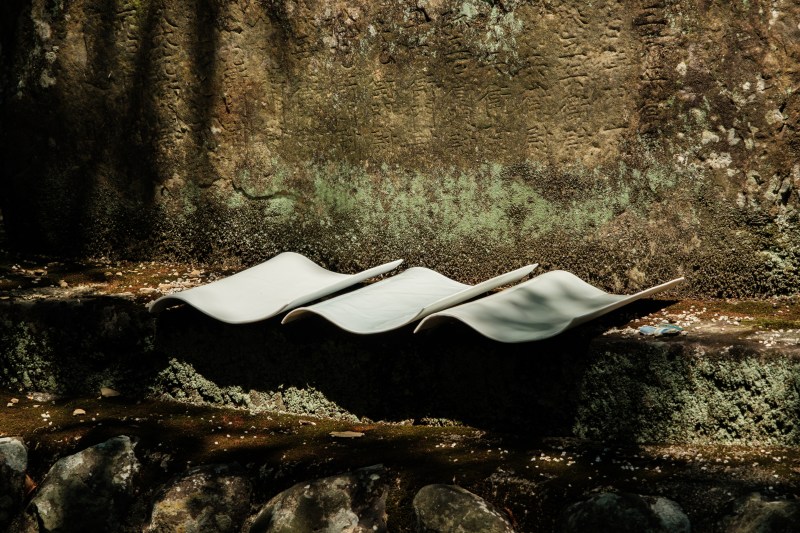
the making of ShadowPorcelain while artist-in-residence of Kouraku Kiln in Arita Japan – 屋根瓦 – kawara – roof tiles – porcelain roof tiles – glazed with 青白磁 – Seihakuji – Pale Blue – also called ‘looking under the water’ – at Yamadani Shrine
Future Ancestral Echoes, 2026
hybrid – a person or thing of mixed origin – when Japanese aesthetics meets European and vice versa
when my late mother’s orphaned porcelain collection of ‘Royal Albert Lavender Rose’ meets Japanese ‘Versailles’ – ベルサイユ – designed by Ryuichi Tokunaga, 4th generation and at that time president and kiln master at Kouraku Kiln – a contemporary hybrid earless translucent eggshell porcelain cup arises…
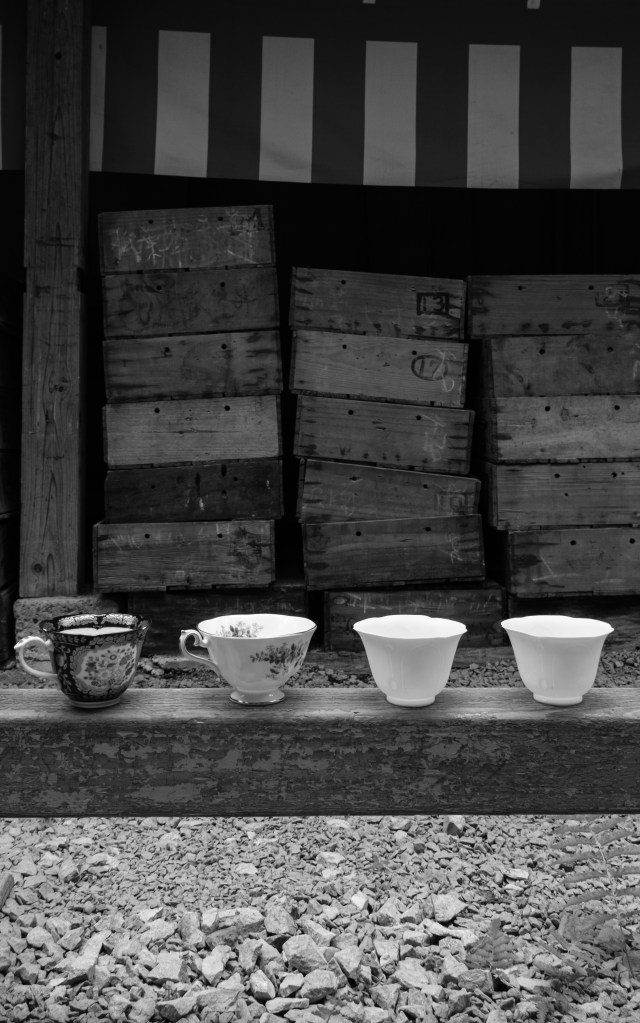
new earless hybrid eggshell porcelain – in between – Japanese and European aesthetics, 2026
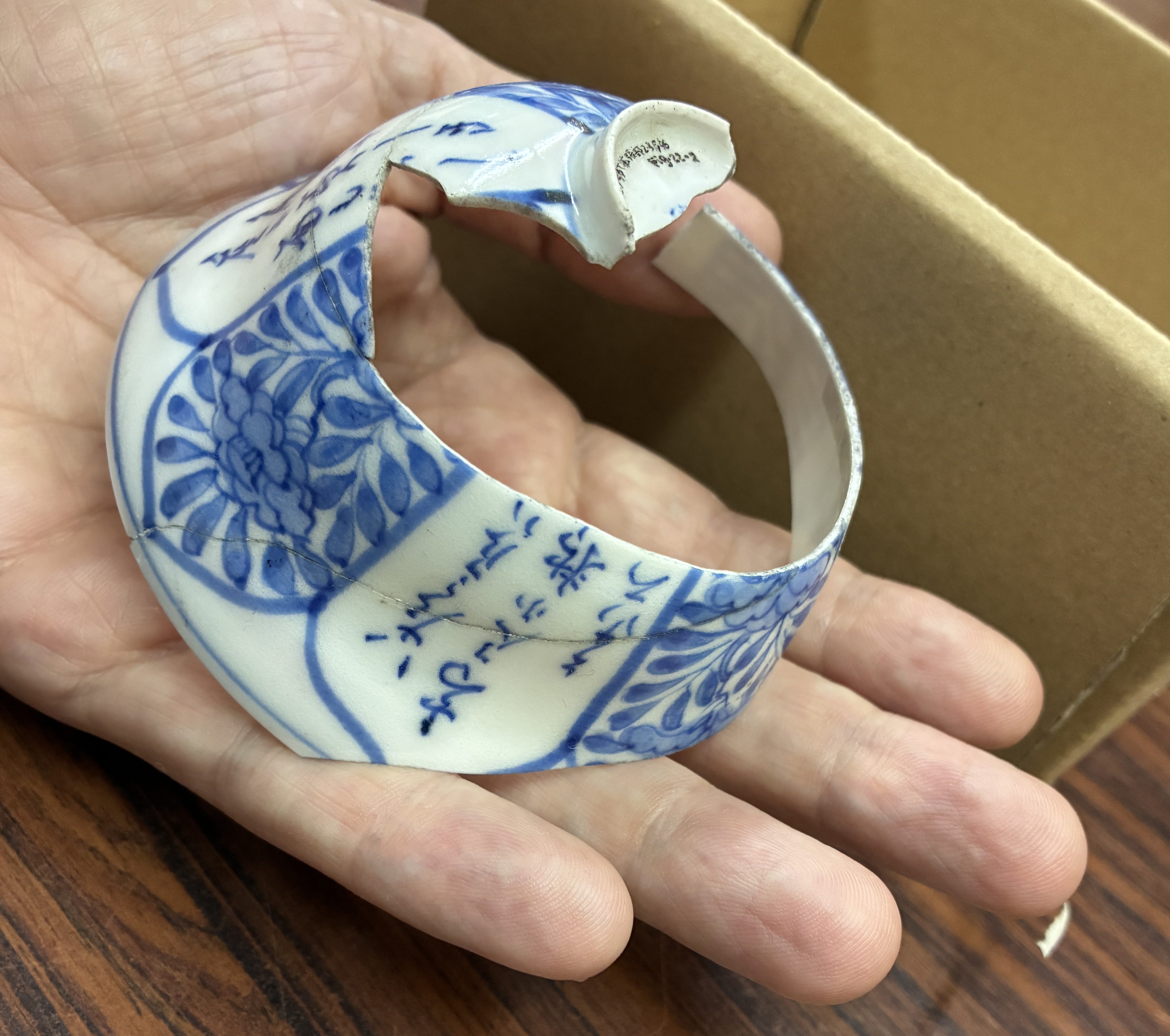
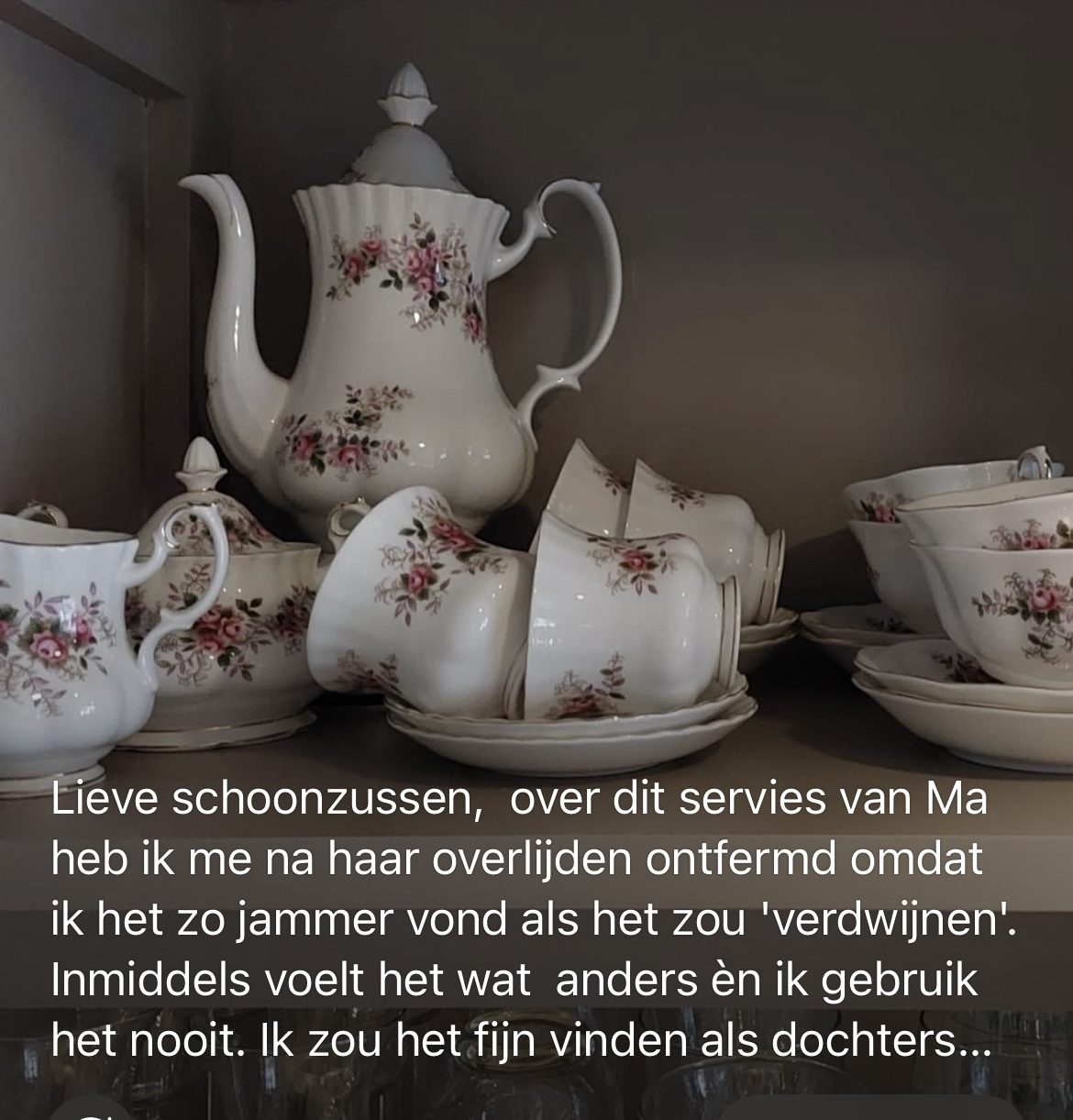
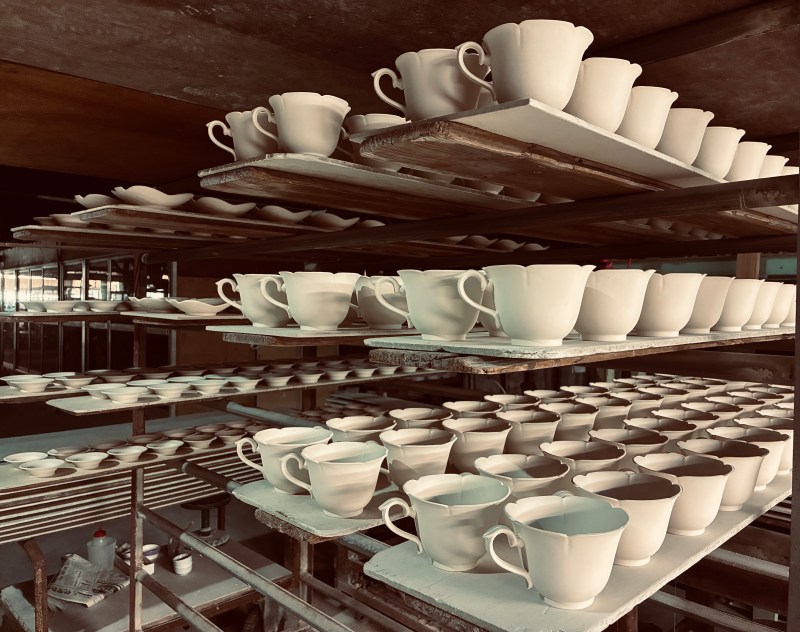

future ancestral echos – hybrid earless eggshell porcelain made in the mold of ‘Versailles’ – painted with Gosu China 8 underglaze and glazed with Seihakuji – with two white dots indicating the intended placement of the ear – broken in the kiln
Palimpsest – recycling my mother’s orphaned porcelain for a hybrid ‘Versailles’
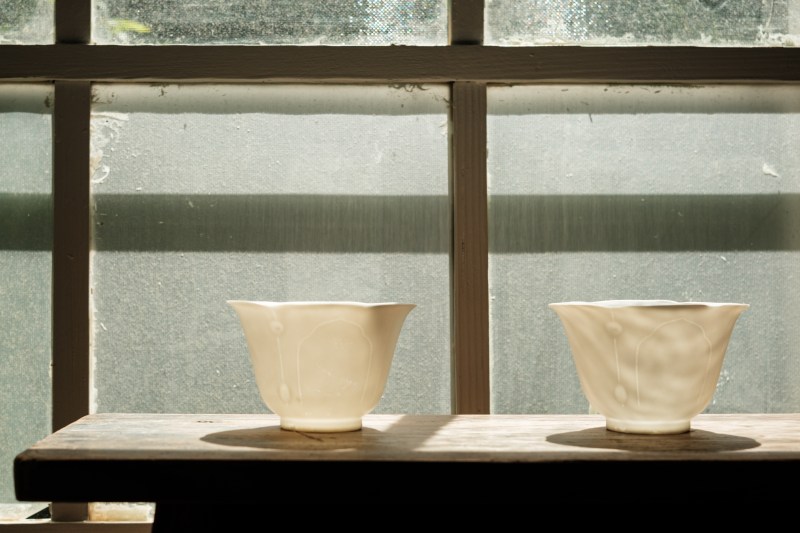
R – Palimpsest – Future Ancestral Echoes, Japan 2026 – recycling my mother’s orphaned Royal Albert porcelain to make a hybrid earless ‘Versailles’ translucent eggshell porcelain cup, casted in the mold of ‘Versailles’.
palimpsest – future ancestral echoes
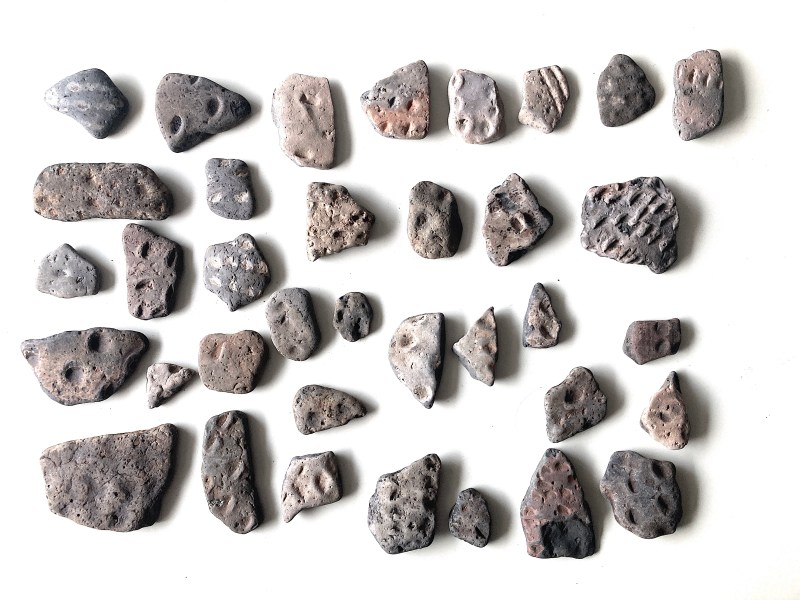
rustic eggshell porcelain
merging the earthly charm of pottery with the refined elegance of porcelain
Making use of ‘rustic’ is an hommage to 16th century nature explorer and ceramist Bernard Palissy, inventor of ‘rustic ware’. The meticulously reproduced details, the finesse and the wide range of coloured glazes seem to breathe life into Palissy’s works. Derived from rus, meaning ‘countryside’ – rural in Engels – ruraal in Dutch, landelijk, arcadisch.

glazed and charcoal fired in the portable kiln of Rokoyugama
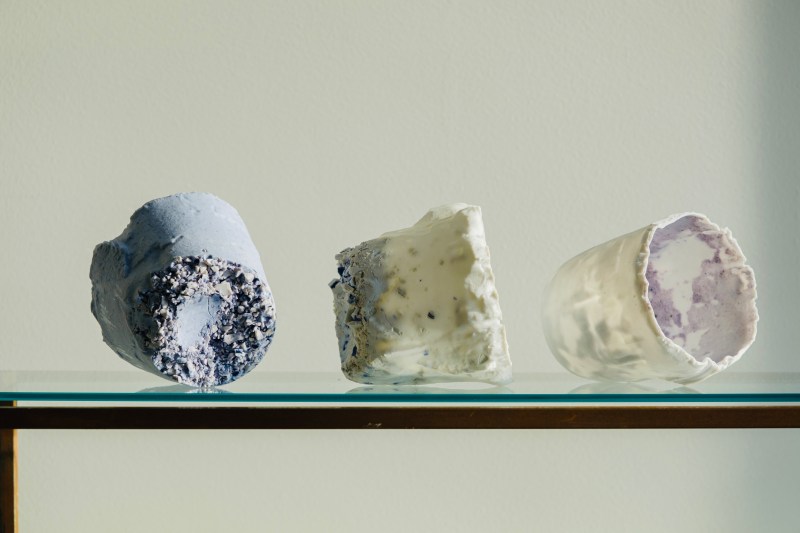
eggshell porcelain with recycled high fired porcelain
Breath
呉須 – Gosu
Following the first fragile test of Breath of Gosu in 2024, we fired the blue Gosu kiln at Fukaumi twice in 2026 to allow raw eggshell porcelain to inhale or collect imprints of years of making the blue pigment called Gosu in the blue kiln, with special thanks to the Fukaumi family in Arita Japan.
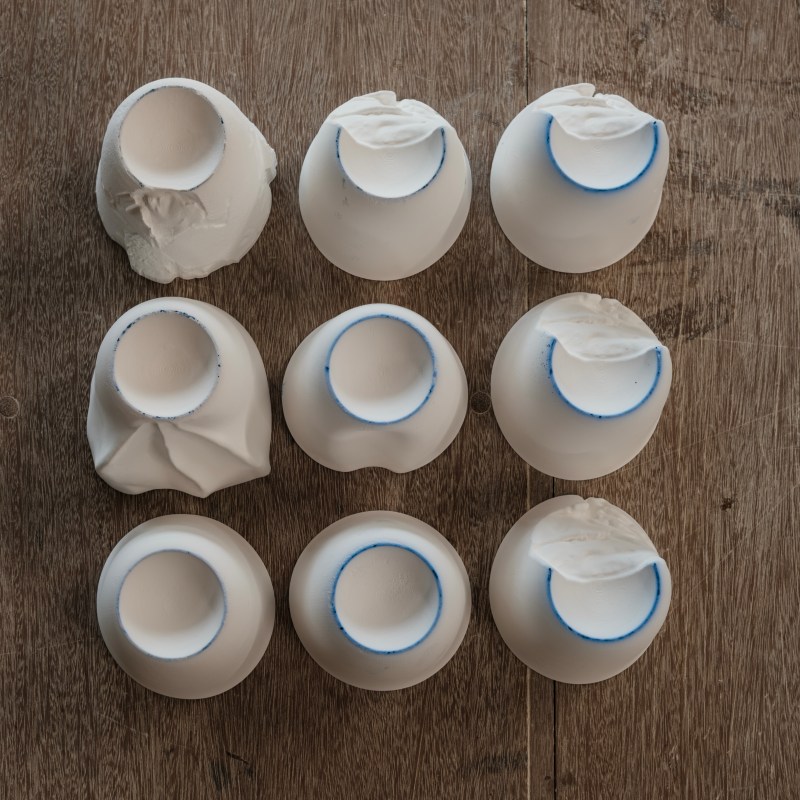
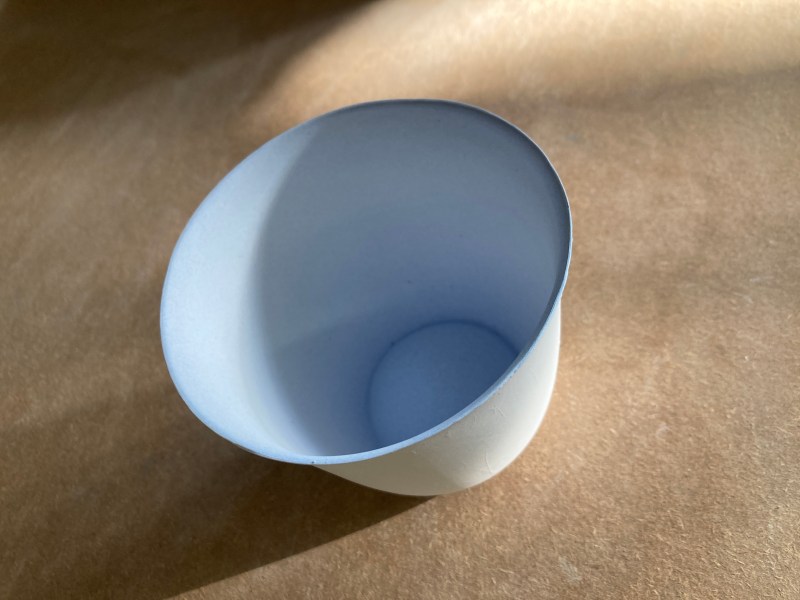
Eggshell Porcelain Cup with Soul, raw, after inhaling years of making Gosu in the blue kiln at Fukaumi in Arita Japan

Biomorphic Porcelain and the concept of inhaling years of making Gosu in the blue kiln at Fukaumi in Arita Japan
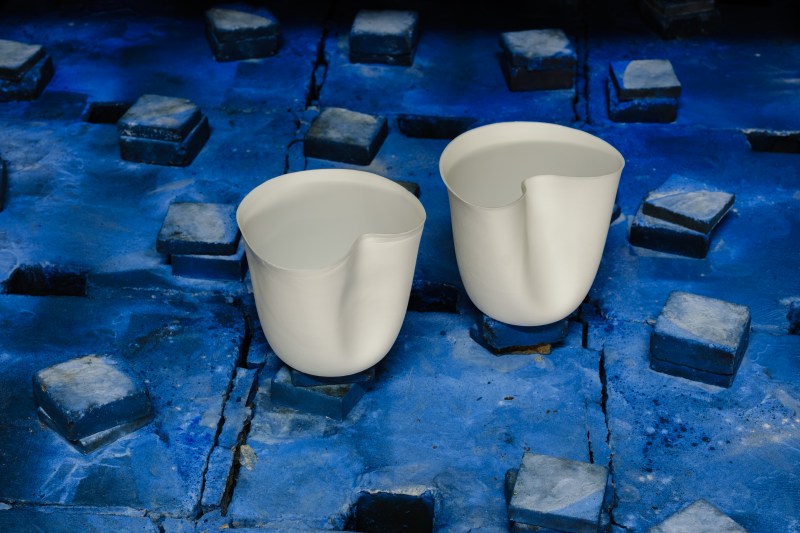
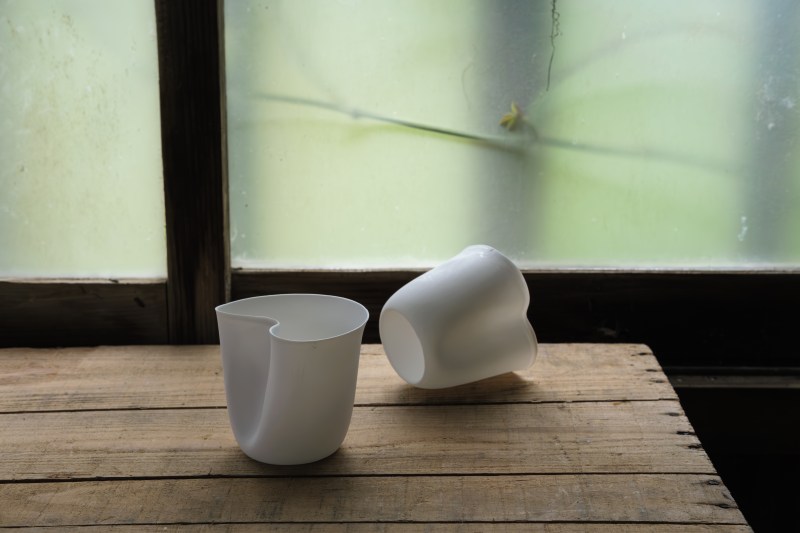
Biomorphic Porcelain, blowing breath before raw liquid porcelain solidifies, Arita Japan
Seeking the light of the shadow, Arita Japan 2024
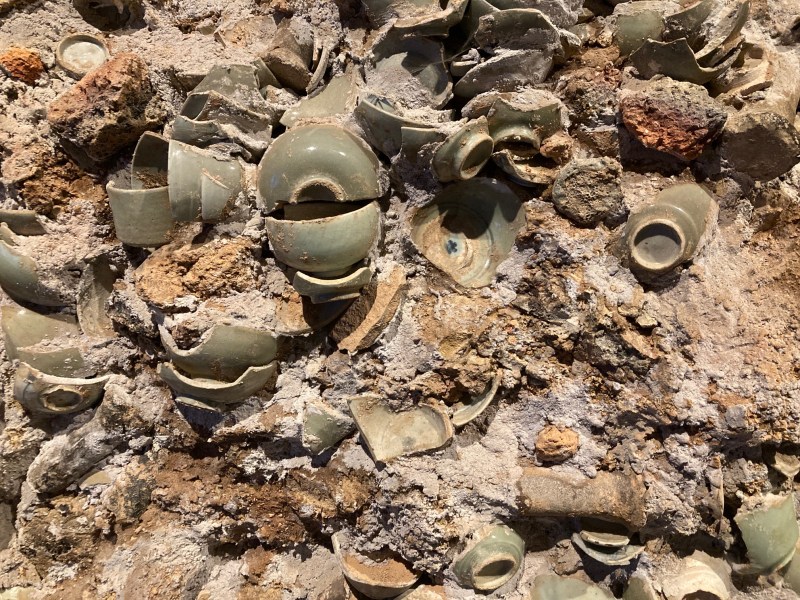
overlevers | survivors II
Raw porcelain meets living botanical heritage in the porcelain city of Arita, Japan. During a three-month artist-in-residency at Kouraku Kiln, circular research is conducted into the skills of local artisans, the surrounding landscape, and 400 years of shared porcelain history. Inspiration comes from Oo Ichou, as the local community affectionately calls the 1,000+ year old Ginkgo tree in their midst. Ultra-thin eggshell porcelain featuring Ginkgo leaves, fruit, nuts, and wood for the ash glaze serves as a tribute to this cherished Ginkgo biloba. The final presentation is a solo exhibition in and with the community center beneath the Ginkgo, in the traditional tatami room with shoji-filtered light. Visitors view the works in quiet contemplation while being seated or kneeling. Light, or the Japanese approach to light in the shadow, played an unexpectedly significant role in this process.
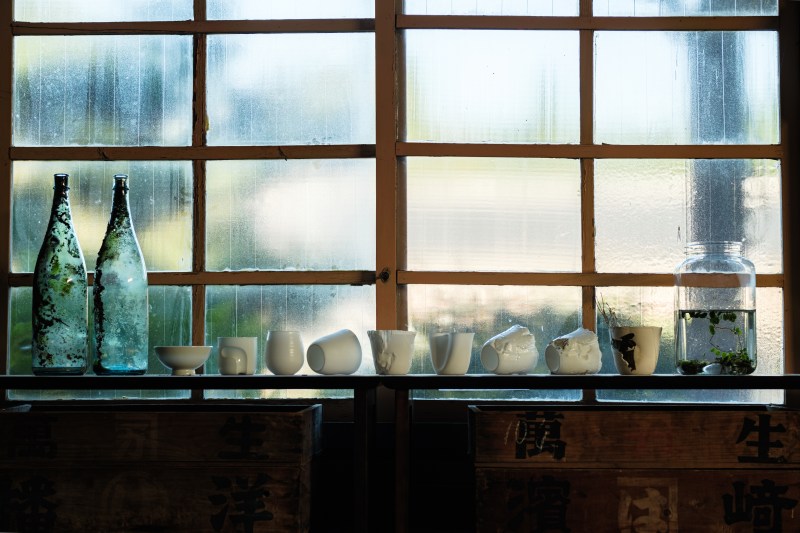
solo exhibition Botanical Eggshell Porcelain themed around Oo Ichou, as the local community lovingly calls the 1000+ year old Ginkgo tree in their midst
artist-in-residency Kouraku Kiln in Arita Japan
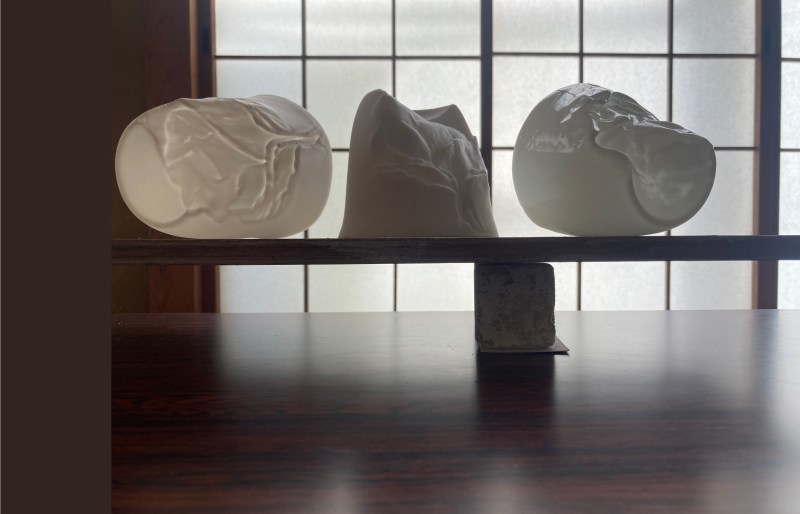
plant made, 3D scan, mold, botanical eggshell porcelain, translucent, recycled high fired porcelain, glazed, Arita Japan
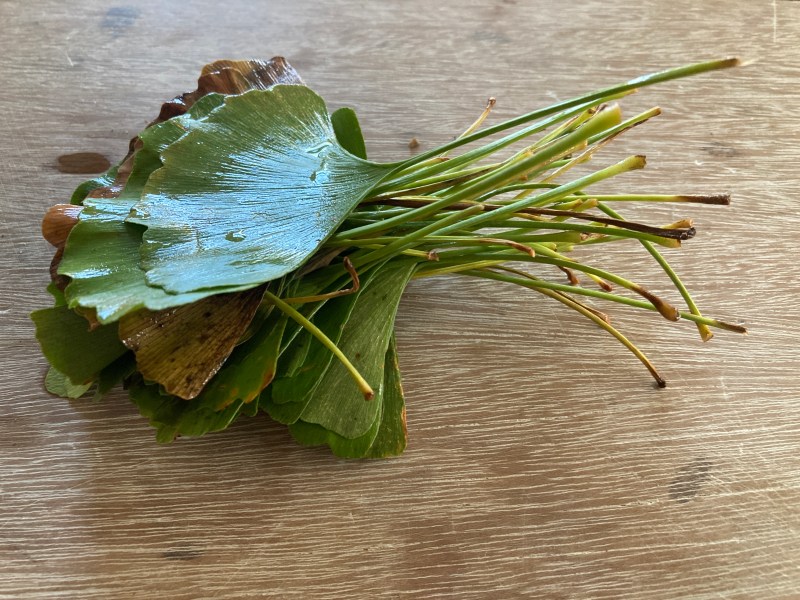
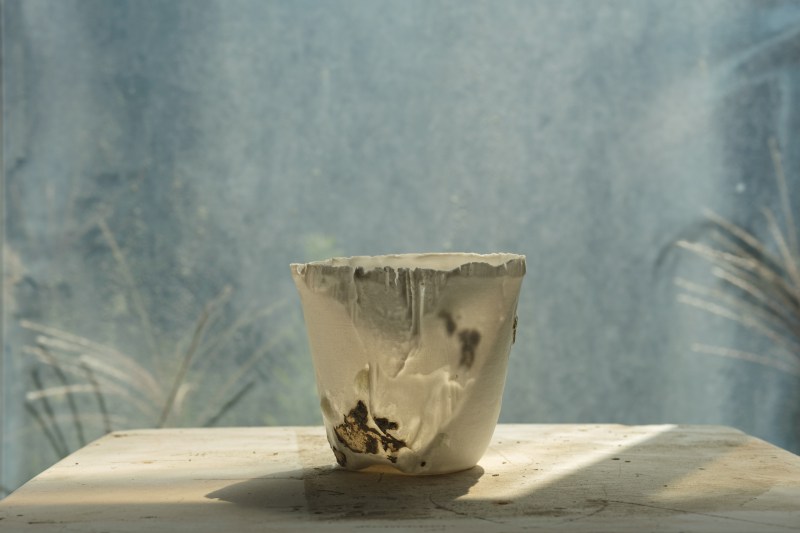
translucent botanical porcelain with Ginkgo ash glaze, Arita Japan
Biodigital Eggshell Porcelain since 2022
overlevers | survivors I
Raw porcelain meets living botanical heritage. In search of the intrinsic expressive powers of nature, touch, and climate, living Ginkgo leaves from a botanical garden create tactile imprints themselves in raw, shrinking porcelain. No image is created on it, but rather an impression in the porcelain. The process of decay is momentarily halted using 3D technology. A tribute to Ginkgo biloba, a living fossil or ‘a tree that forgot time’ (Peter Crane). A survivor, believed to have remained unchanged for 200 million years during various mass extinctions and considered the oldest surviving plant. Deeply interwoven with the prehistoric planet. Cherished, valued, and saved from extinction by humans.
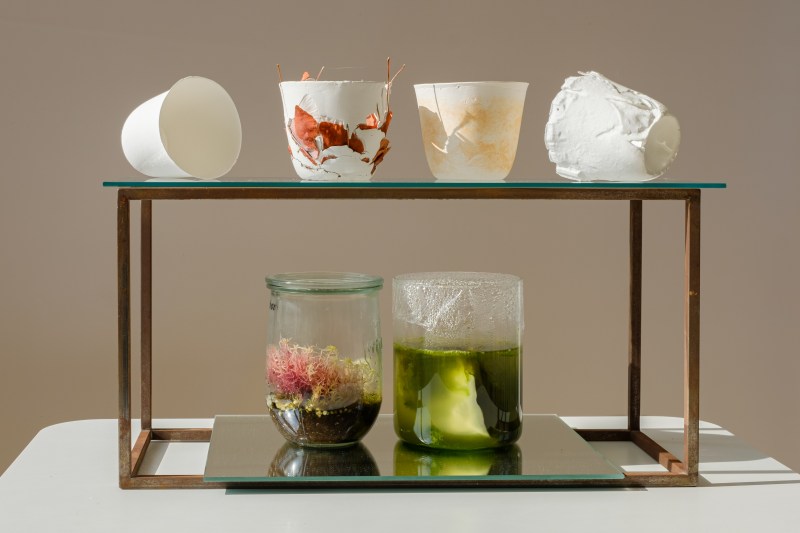
circular research Overlevers | Survivors, hommage to Ginkgo biloba, said to be a living fossil, a ‘tree that time forgot’ (Peter Crane); fired, raw with living ginkgo leaves, bisque with ginkgo, fired plantscape; submerged in water with seaweed. living indigenous Dutch peat mosses
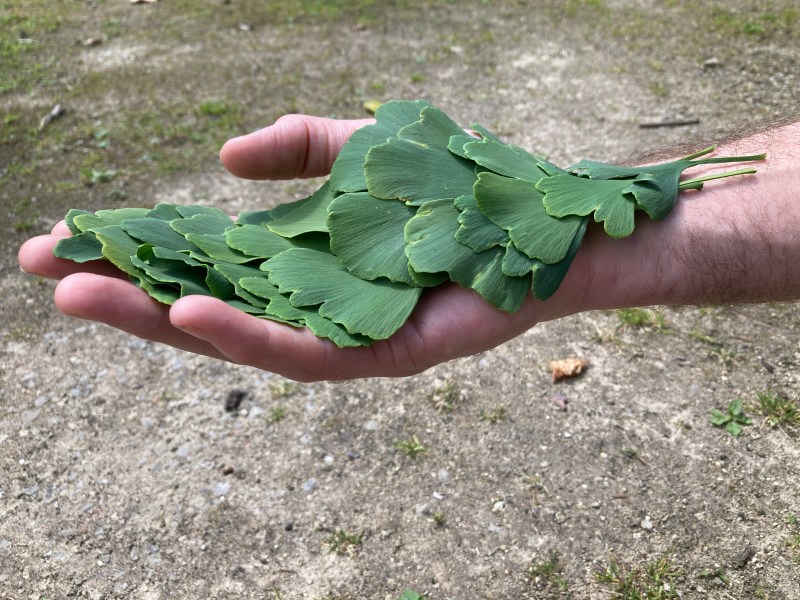
leaves of Ginkgo Birth Tree, artist-in-residency Park Studio de Orangerie, Zone2Source Amsterdam
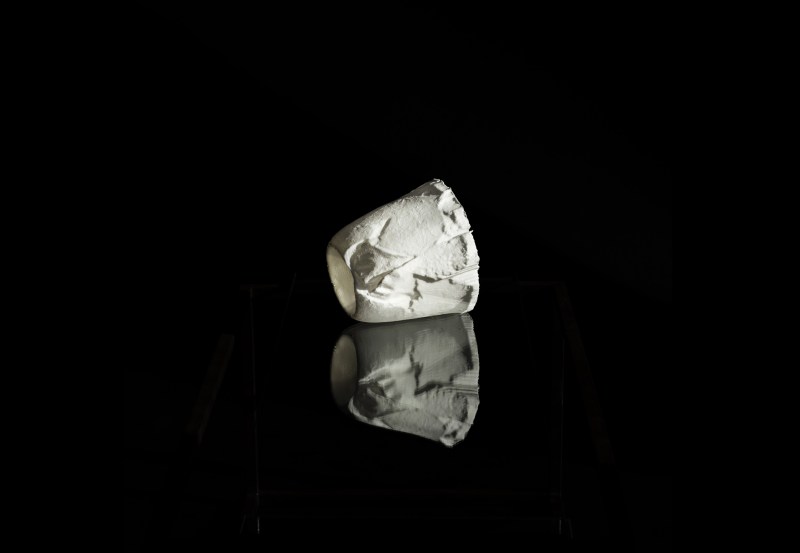
Plantscape, plantmade, botanical porcelain

Raw Plantscapes & Raw Subscapes
living leaves are in the proces of making imprints themselves in raw porcelain. Dagzomen, Artis-in-residency at Park Studio De Orangerie

living leaves of the oldest ginkgo in NL – estimated age of 350 years, brought by VOC ships and planted in de Old Botanical Garden in Utrecht – are in the proces of making imprints themselves in raw porcelain
Inhale. Exhale.
The art of making an Earth Sphere 2020
This 24/7 online workshop with participants from all continents follows the sunrise across the earth during COVID lockdown. Conducted in my backyard with sand from beneath my home by the sea. Dune sand that hasn’t seen sunlight for 125 years. Inspired by Dorodango, the Japanese art of making mud balls.
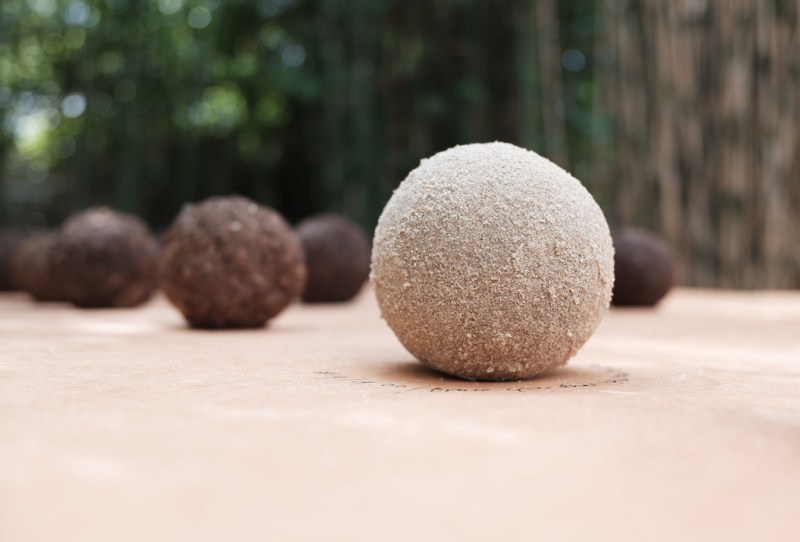
24hr online global workshop following the sunrise around the globe with participants from all continents, Re-Peat Fest during Covid lockdown, 2020
貝 – Shell – Schelp
Blue,
here is a shell for you
Inside you’ll hear a sigh
A foggy lullaby
There is your song from me
Joni Mitchell, 1971
90 – duration of time 2026
daily making of a reversed imprints of a shell – an accumulation during 3 month’s residency in Japan – deep pools of light and shade emerge as the relief made by the imprint of the shell enhances the effect of various painting and glazing techniques
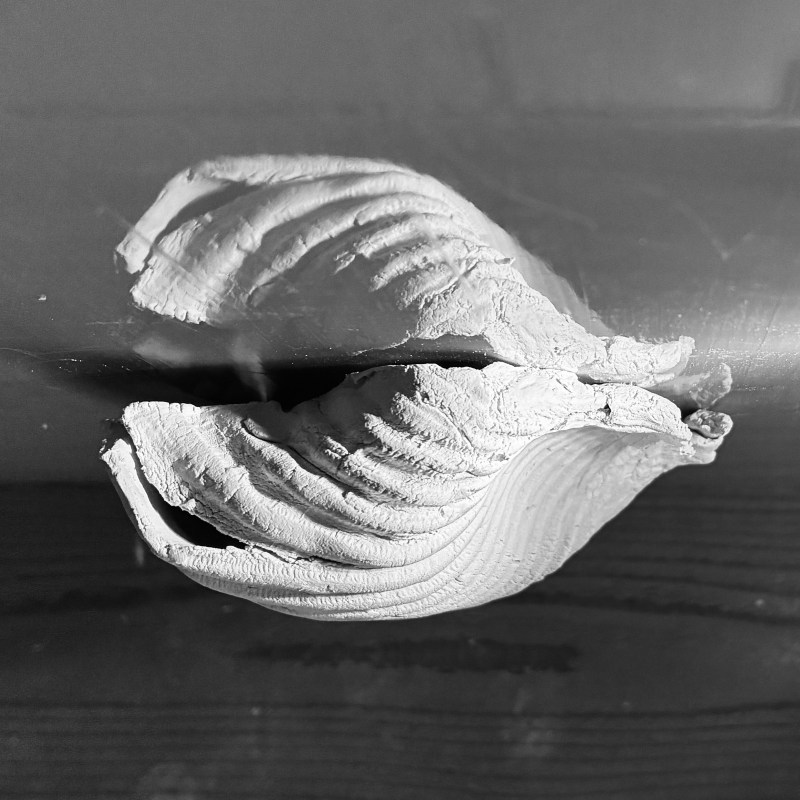
蛤 – Hamaguri – clam – venusschelp 2026
貝合わせ – Kai-awase – shell-matching is a Japanese game with shells, typically the shells of the hamaguri clam
only from one shell two halves can match
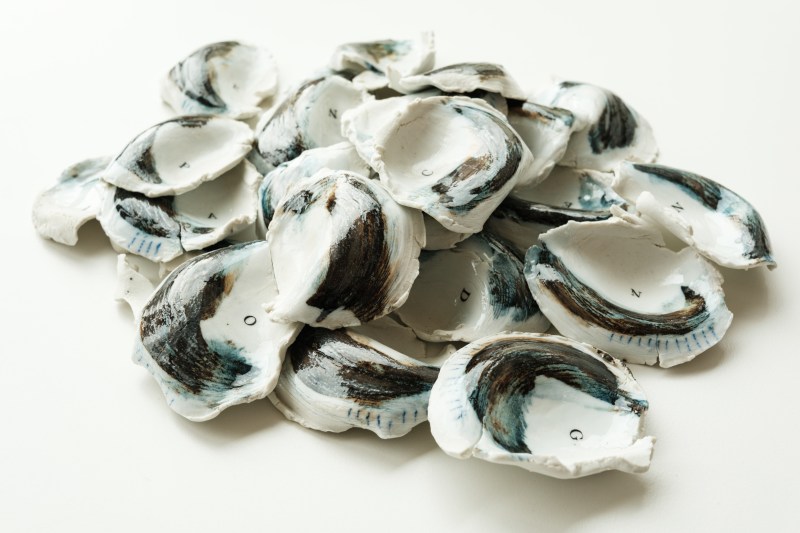
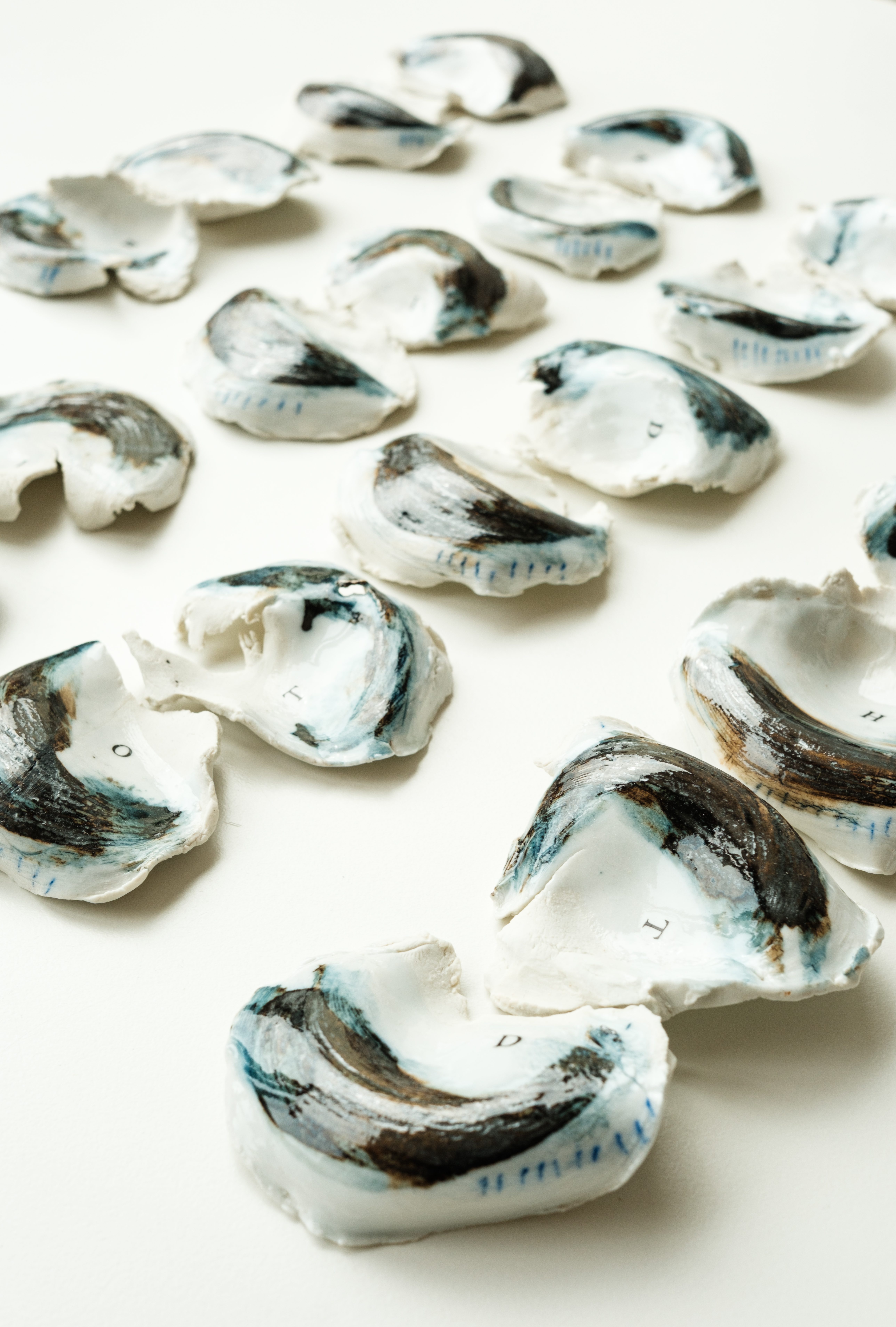
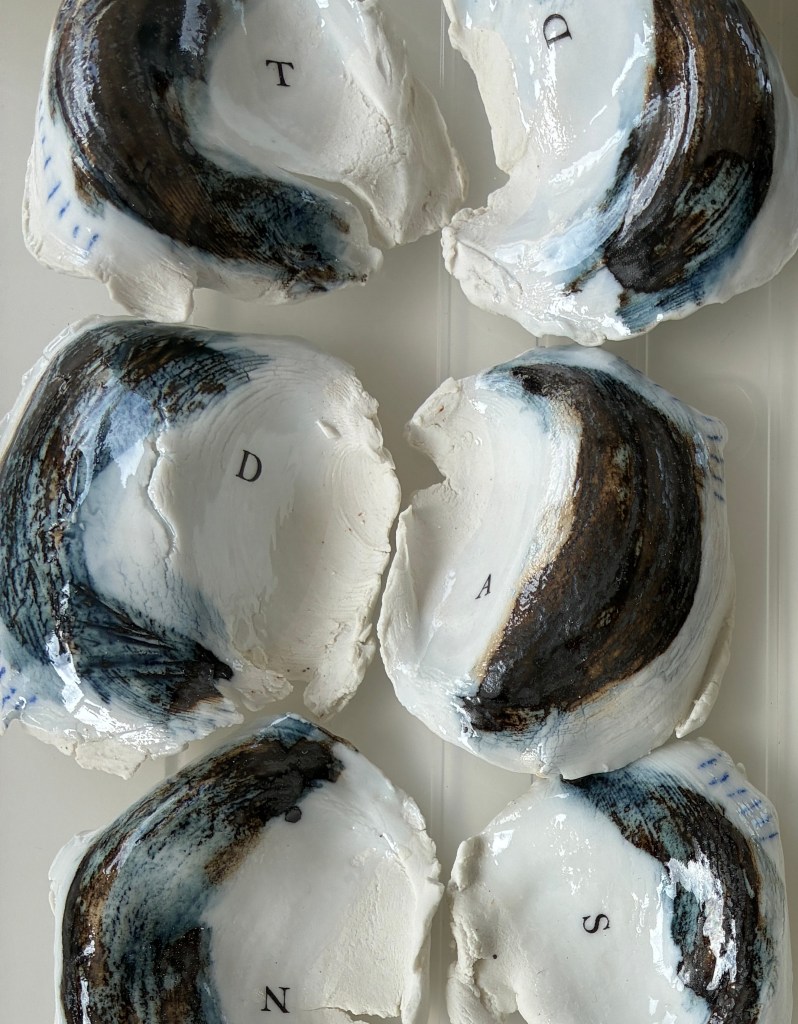
porcelain, underglaze Gosu China no 8, glaze, decal /transfer
Shells on Shells
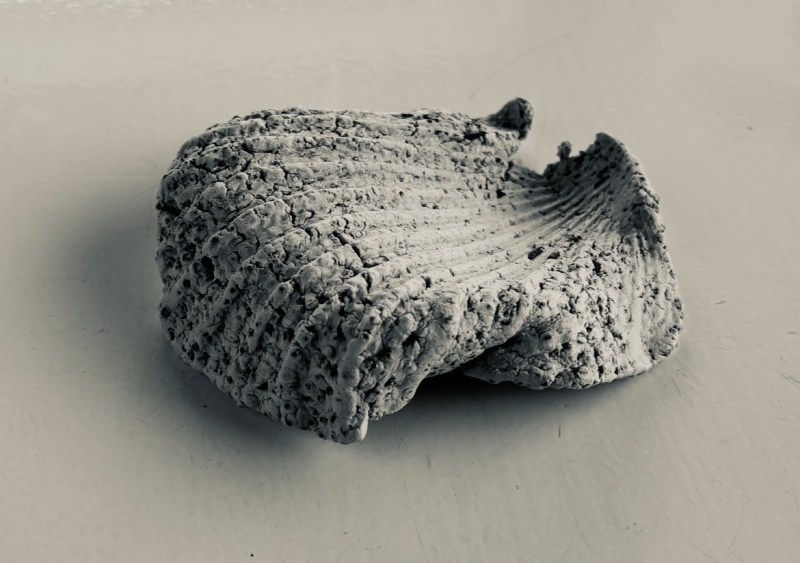
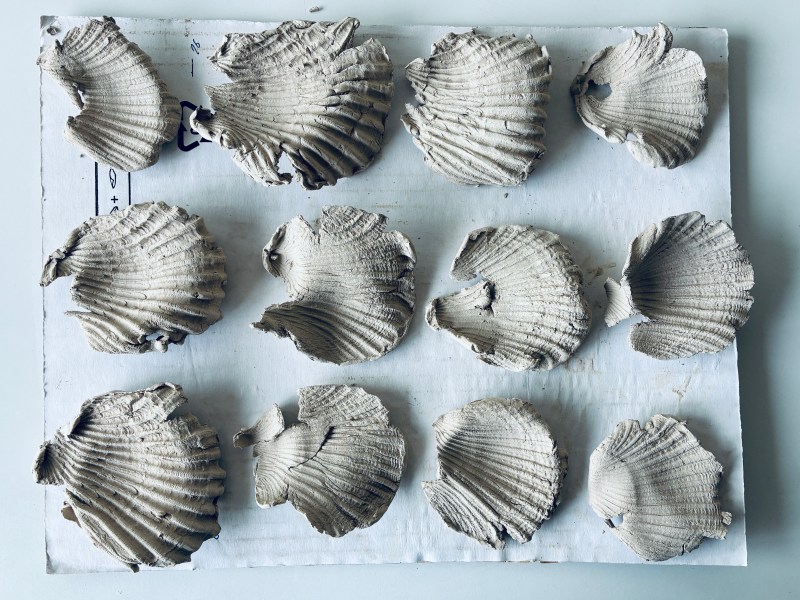
Reversed Soft Shells 2022
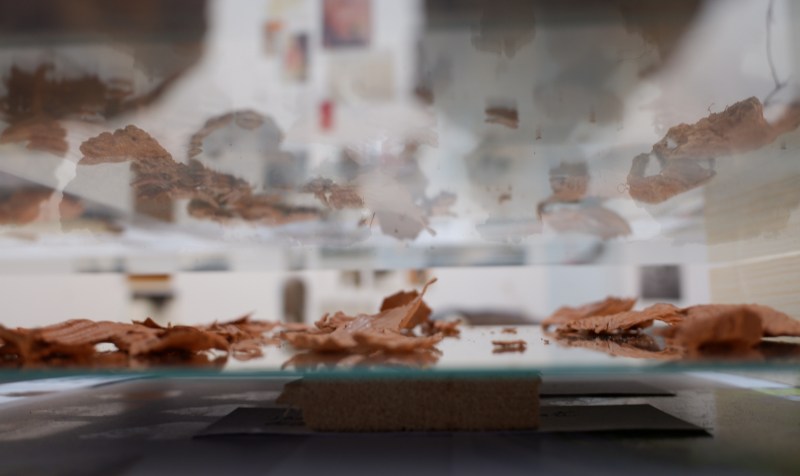
Neolithic Cardial Ceramics, reversed raw Soft Shells
artist-in-residency Cascadas ArtSpace Barcelona icw UAB, Autonomous University of Barcelona, dept. Archeology
Exhale. Inhale. 2020
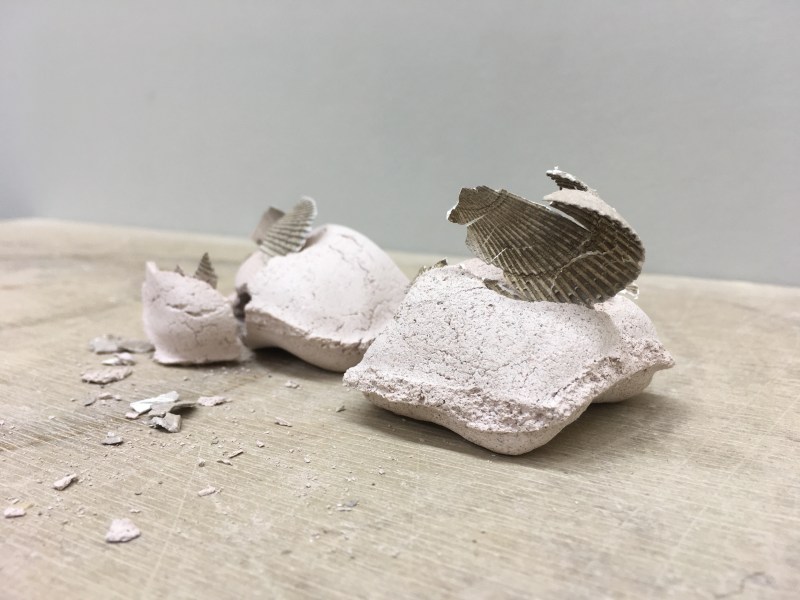
is my shell cabinet a zoo?
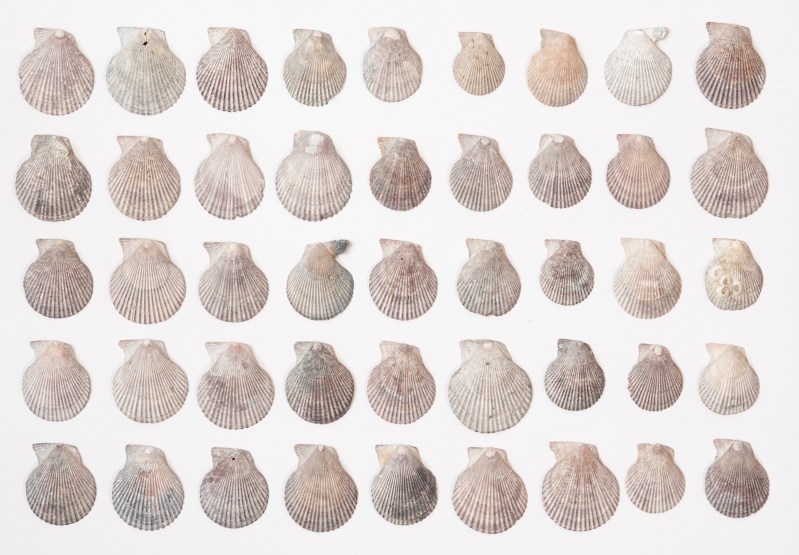
Shells are considered Biota Animali, animals, 2009-2020
Still – Life
Finds and man-made objects are brought together in so-called climate scenes. Upper and lower worlds are shaped, which reveal unforeseen relationships and intermediate spaces through sunlight, glass and mirrors, shadow and reflection. A kind of allegorical, symbolic still life emerges, which, as an intensified experience, reflect on an everyday reality, on vulnerability and transience, beauty and poetry.
Still-Life collection of Cups with Soul 2020-2023

immersive climatescapes, conceptual porcelain, hybrid fossils-artifacts, hybrid living fossils; keileem, mammoet fossiel, archeologische potscherf, mos en Ginkgo.
Beker met Ziel | Cups with Soul since 2020
Love for the sea and questions about changing (coastal) landscapes and future climate take shape in a simple, sensual Cup with Soul.
According to animism, all people, animals, plants, stones, rivers, the weather, and landscapes have a soul. They are all considered animated, possessing agency and free will. Animism comes from the Latin word anima, which means soul or breath. Porcelain makers speak of the memory of porcelain.
Does porcelain have a soul?

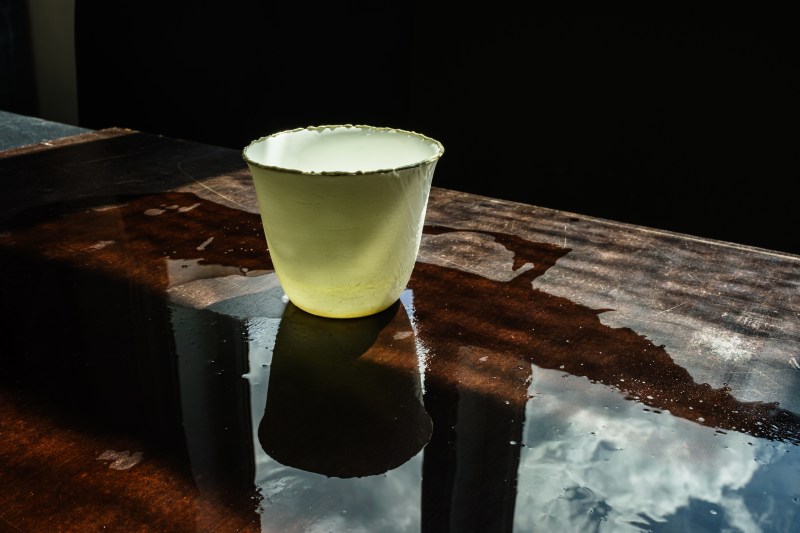
The Hague Dunes Iron Age Porcelain 2021
Fossils and archaeological artifacts can be called the material memory of the climate. By re-inventing ceramic techniques and historical porcelain and Bone China recipes using raw earth materials, and through the circular reuse of mammoth fossils and archaeological Iron Age pottery shards, unique hybrid objects emerge, each with its own distinct narrative.
re-cast as repository | residual intimacy
re-inventing historic porcelain – and Bone China recIpes, artist-in-residency EKWC 2021
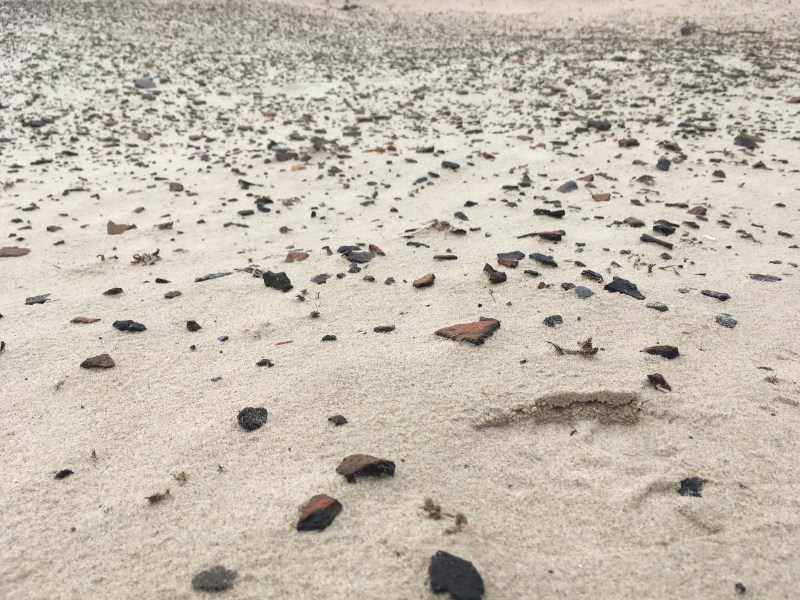
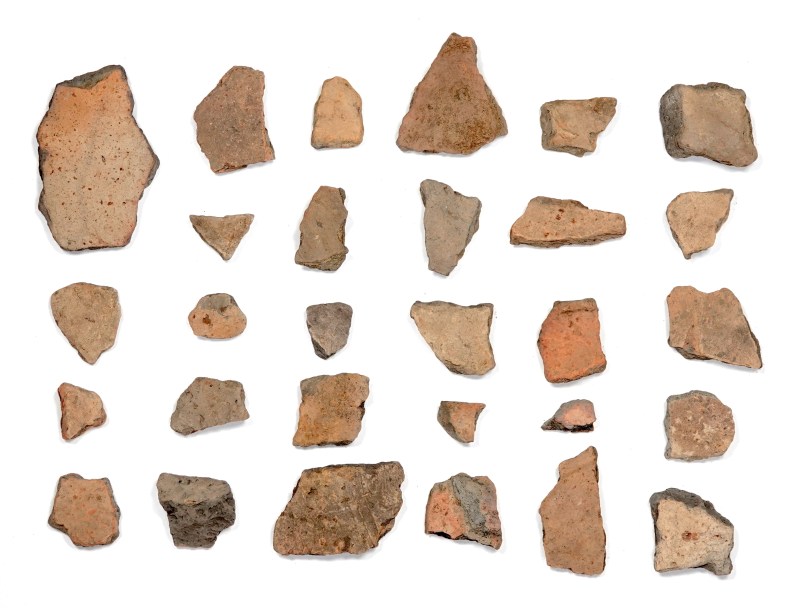
Neolithic Iron Age pottery shards collected in The Hague Dunes, (volunteer in) archeology
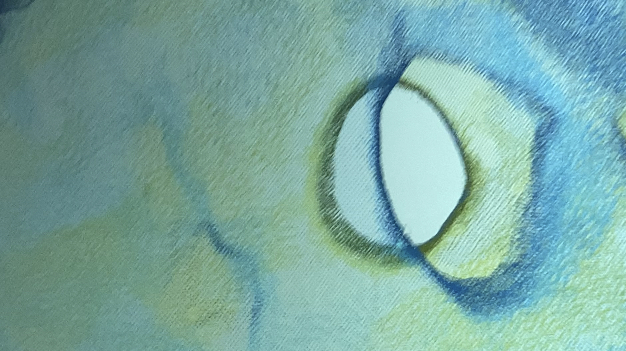
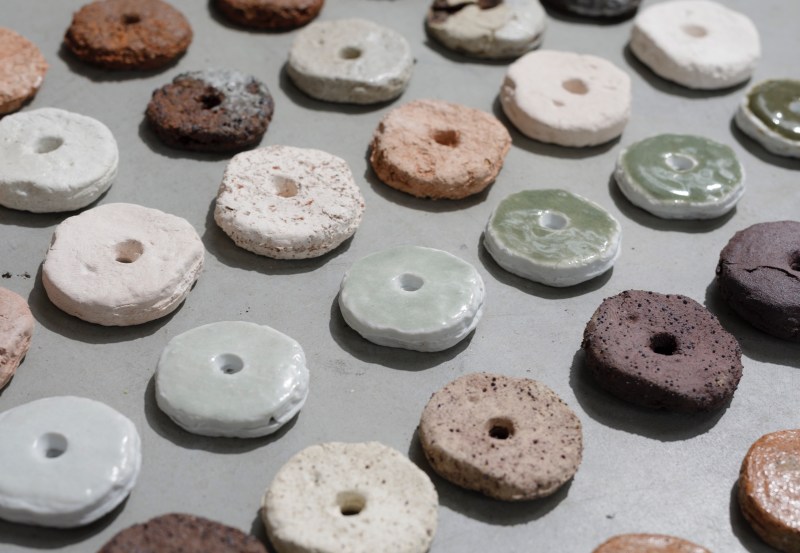
Open Studio Test Case XXIV at EKWC, introducing The Hague Dunes Iron Age Porcelain & – Celadon at – EKWC, the European Ceramics Work Centre, 2021
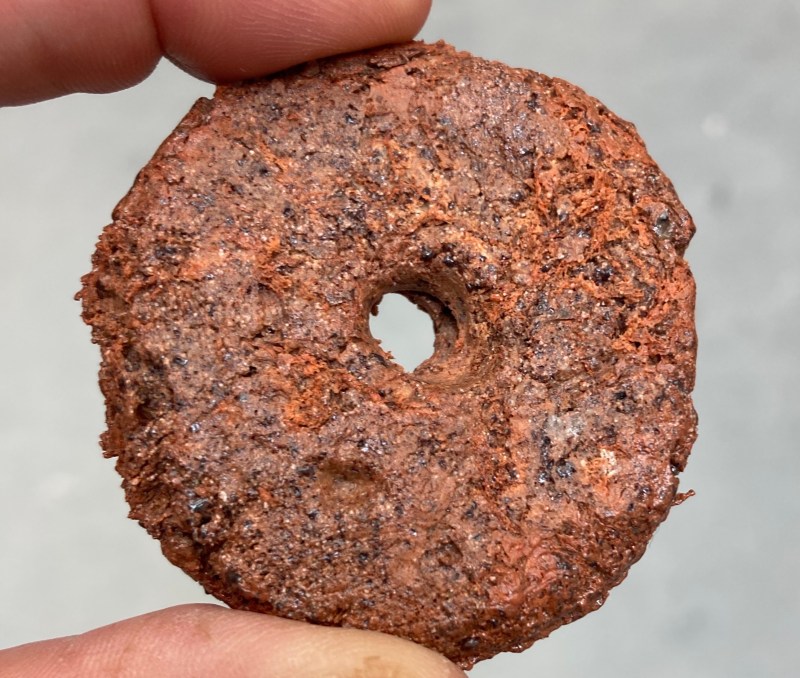
reinventing Bone China, re-recycling Iron Age pottery shards mixed with mosses; inspired by prehistoric recycling of a broken pottery shard for a spindle whorl; 2nd artist-in-residency EKWC – the European Ceramics Work Centre, 2021
North Sea Mammoth Fossils Porcelain 2020
A mountain becomes liquid and plants petrify. By mixing liquid porcelain with wild clay, boulder clay, mosses, seaweed, algae, shells, mammoth fossils, and archaeological Iron Age pottery shards, a love story of attraction or repulsion between different entities unfolds.
The Zandmotor is a man-made coastal landscape. An example of a climate-adaptive Anthropocene Building with Nature, constructed in 2011 using sand from the North Sea floor. Built to merge with the sea and dunes. Pleistocene sand that also contains many fossils from the time when mammoths lived on the then-dry seabed.
sedi | senti | ment
re-inventing historic porcelain- and Bone China recIpes, artist-in-residency EKWC 2020
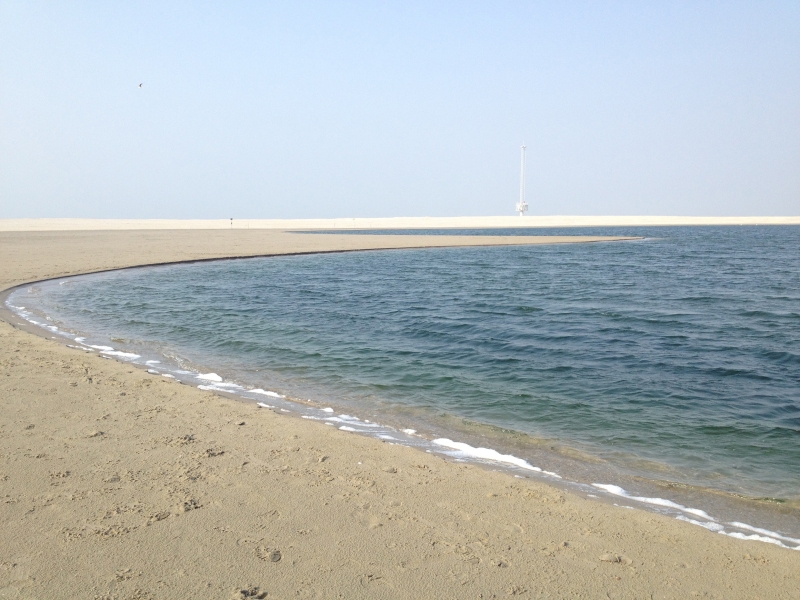
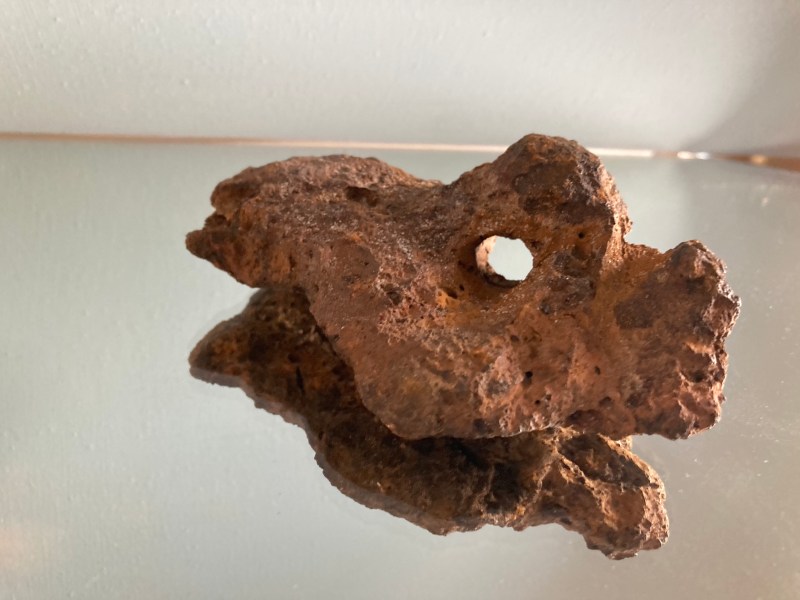
A washed-up chunk of peat transforms over time into bog iron, pierced by a hole from a reed stem that was alive at the time.
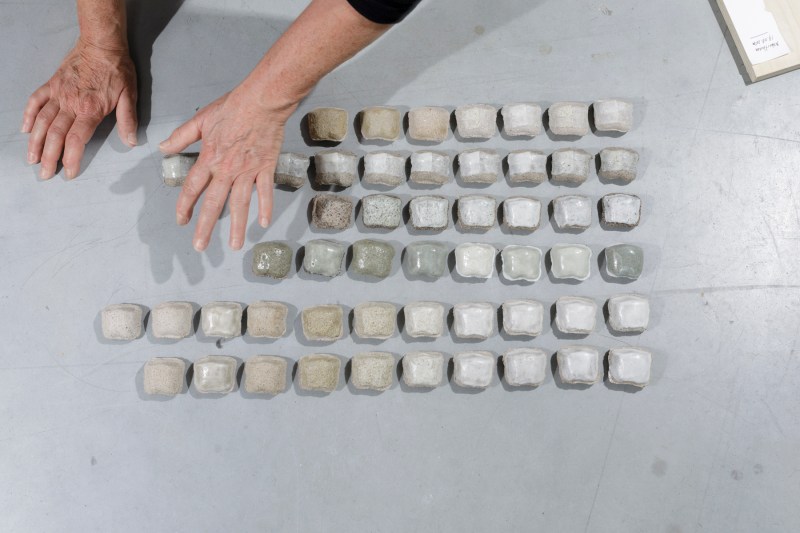
selection out of 270 tests for North Sea Mammoth Fossils Porcelain & – Celadon, artist-in-residency at EKWC – the European Ceramics Work Centre, 2020
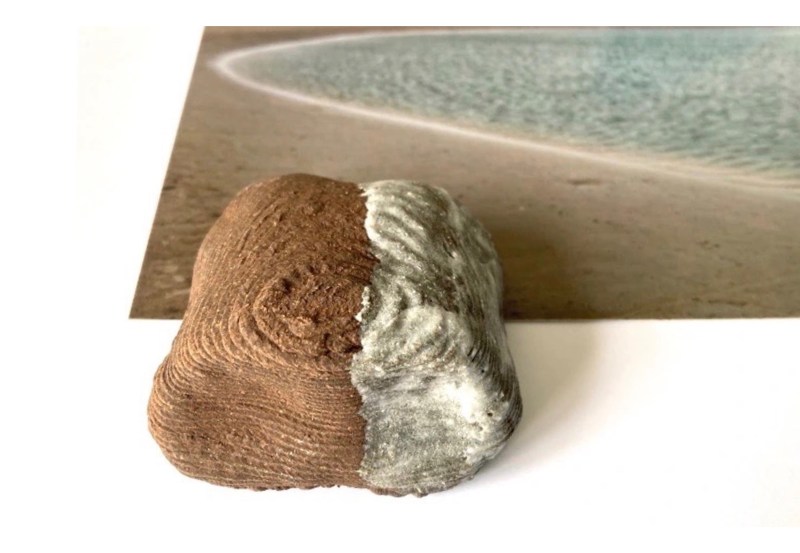
3-d printed North Sea Mammoth Fossils Porcelain & – Celadon; artist-in-residency at EKWC – the European Ceramics Work Centre, 2020
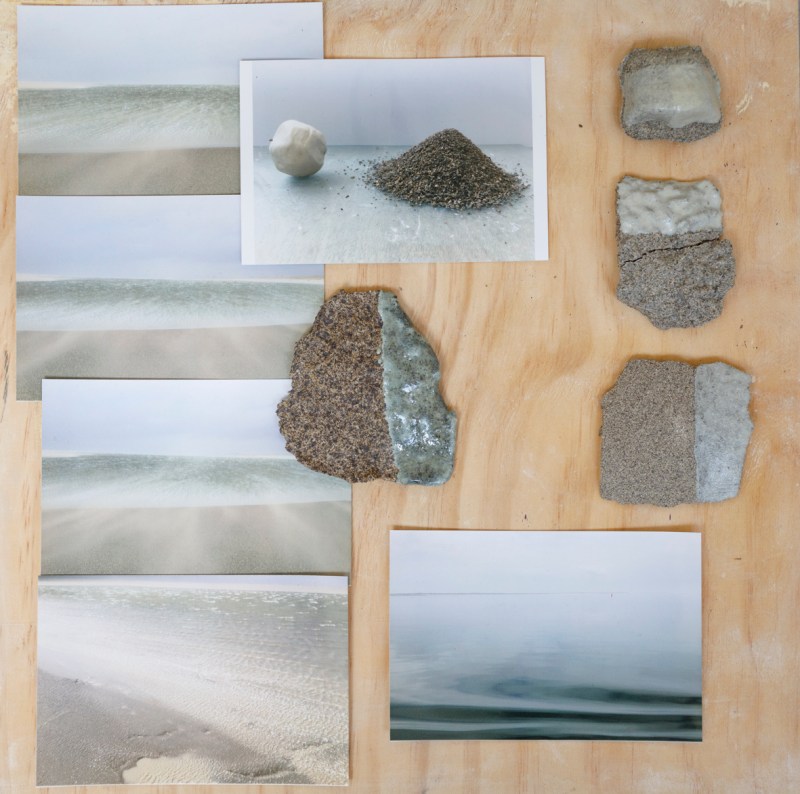
Open Studio Test Case XXII at EKWC, introducing hybrid porcelain: North Sea Mammoth Fossils Porcelain & – Celadon at EKWC – the European Ceramics Work Centre, 2020
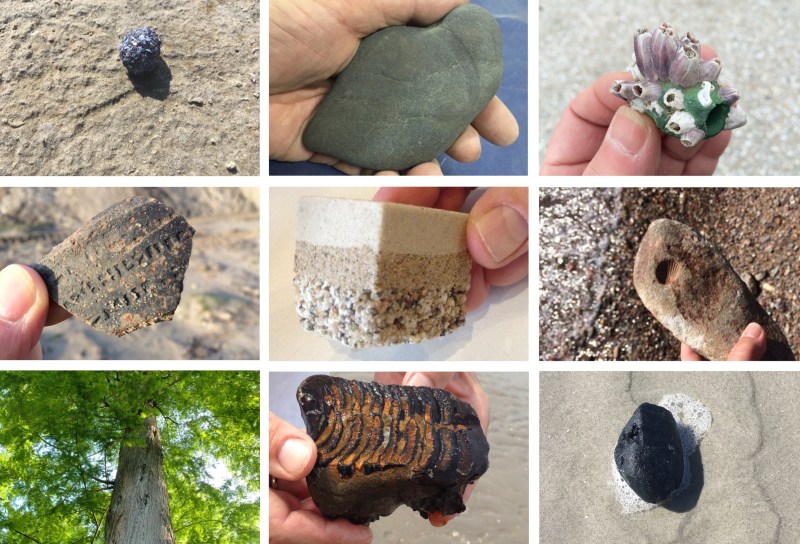
inspiration hybrid fossils and/or artifacts